
What We Learned from Researching Marble Vs Porcelain and Why it’s Important for You
What We Learned from Researching Marble Vs Porcelain and Why it’s Important for You
You’ve scoured the internet for kitchen design ideas and benchtop inspiration but are still undecided on which material to use. Don’t be alarmed, this is a common dilemma these days, especially considering how many surfaces there are to choose from. Of these, there are two that are most known for their timeless appeal. Yes, for many homeowners it comes down to a choice between marble and porcelain.
Here at Archant, we know how tricky this decision can be. Each year, we work with hundreds of designers, joiners, and homeowners on this exact topic. The good news is, that we’ve done the research for you, and have presented it here in a format that’s easy to review. There isn’t any bad news, just the reality that these are both exquisite choices. This does make it harder to decide, but ultimately gives you, the buyer, more options.
The question remains, is marble or porcelain the best material for your kitchen worktop?
In this piece, we provide a deep look at these two premium surfaces, including available styles, cost, the difficulty of installation, warranty, and of course durability. Put simply, if either product is too fragile, it’s not worth your time. As such, we’ll also talk about what’s involved with caring for and maintaining these counters. By the end, you’ll have a solid idea about which direction to proceed.
Cost of Marble vs Porcelain Benchtops
Matching the product to your budget is a smart place to start your research. Both surfaces are higher-end materials, but prices have levelled off in recent years. Let’s begin with the approximate cost of marble. According to an informative article by Houzz, “Prices for marble benchtops vary quite a bit. You can pay anywhere between $800 and $2,200 per square metre.”
*Disclaimer – These figures can and will vary depending on colour, your location, the supplier, stock levels, and more. As such, you may find prices on the lower or higher end of this range.
The popular design resource HiPages have priced porcelain surfaces much lower than marble. They note that buyers can, “Expect to pay around $390 to $550 per square meter for an engineered stone benchtop.” Again, this can change based on the type of finish, colour, location, and supplier. It pays then to shop around and look at different tiered collections of the same material.
You may be able to find a great price on a slab of porcelain that’s less ornate, than one with texture and complex vein patterns. Clearly though, porcelain is much more cost-effective than marble.
What’s More Stylish, Porcelain or Marble?
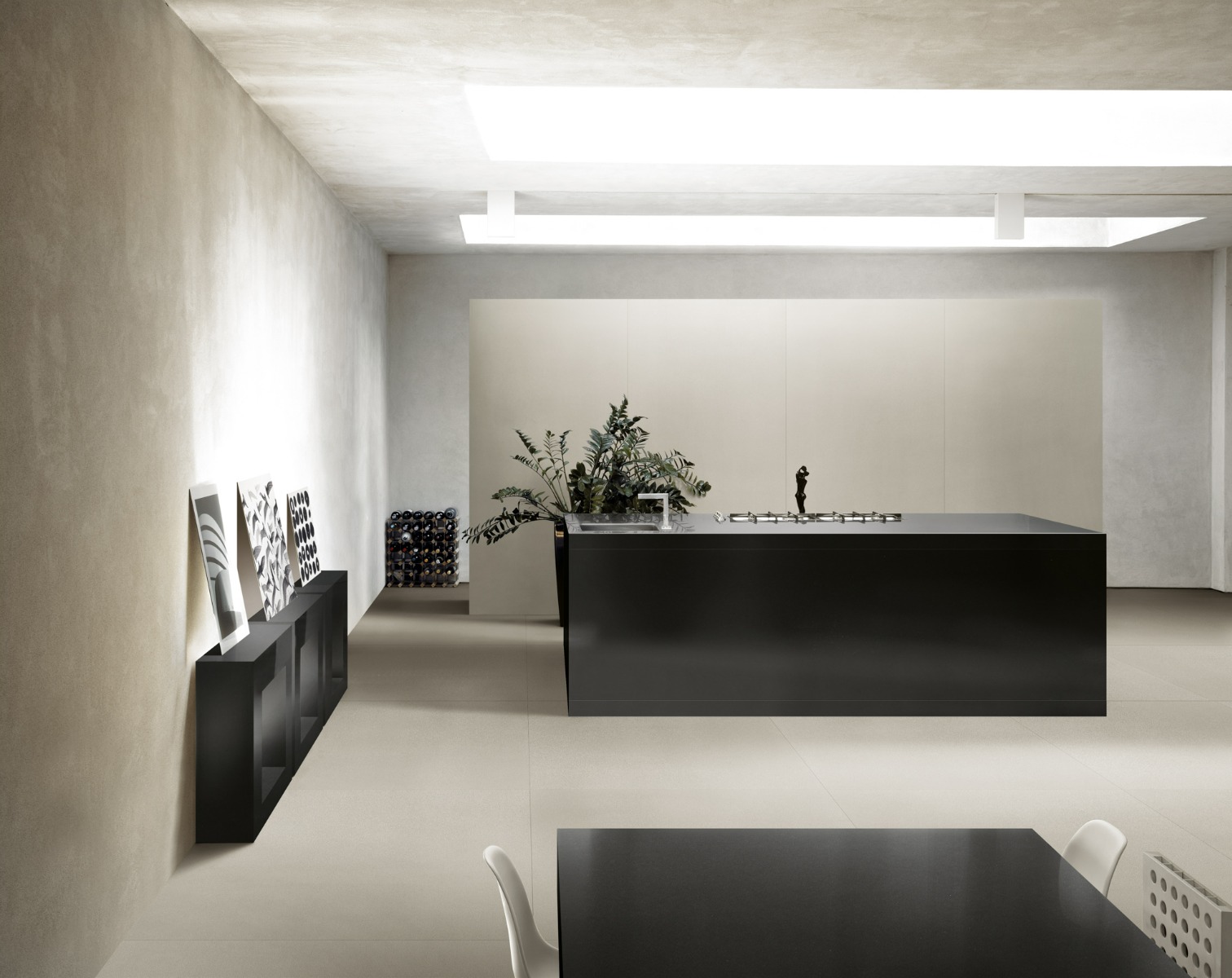
In the past, marble would have had the advantage here. Yet, Florim porcelain slabs are created in Italy and combine natural materials with the latest advances in technology.
It’s now possible to recreate the gorgeous veins and patterns of marble in a porcelain slab at a fraction of the price. This process can be used to mimic just about any surface type including marble, metal, and cement.
And while this is more of an engineered stone as opposed to a natural stone like marble, it’s nearly impossible to differentiate the two with the human eye. Beauty then is in the eye of the beholder. That timeless look of natural stone can be found with either surface.
Ultimately, the difference goes back to the cost. Engineered stone is far less costly than natural stone.
What About Maintenance – is Marble or Porcelain the Best Kitchen Surface?
It doesn’t matter how great your counters look if they’re not built to last. Many of our clients at Archant need a durable surface that can withstand the daily needs of family life. This means it needs to be easy to clean, hard to damage, and resistant to stains and heat damage. So, which one of these materials offers all these benefits?
With a non-porous surface, porcelain is easier to maintain than marble. The material is resistant to staining, and unlike natural stone, it doesn’t react poorly to acidic spills. It can also be cleaned easily by just about any commercial or homemade cleaners.
Both worktop options feature heat resistance but not with the same level of effectiveness. With porcelain, you can transfer hot cookware directly onto the surface from the oven without worry. It won’t burn or damage the bench in any way.
Marble, on the other hand, can suffer from yellowing or discolouration, and even something called thermal stress. Exactly how resistant it is will depend on the grade of marble purchased. Lower grade options can crack more easily, causing permanent damage.
How Involved in the Installation Process with Marble and Porcelain?
The first thing you should know is that neither product is a good candidate for a DIY installation. Mistakes can be costly and time-consuming so it’s best to leave this to the professionals.
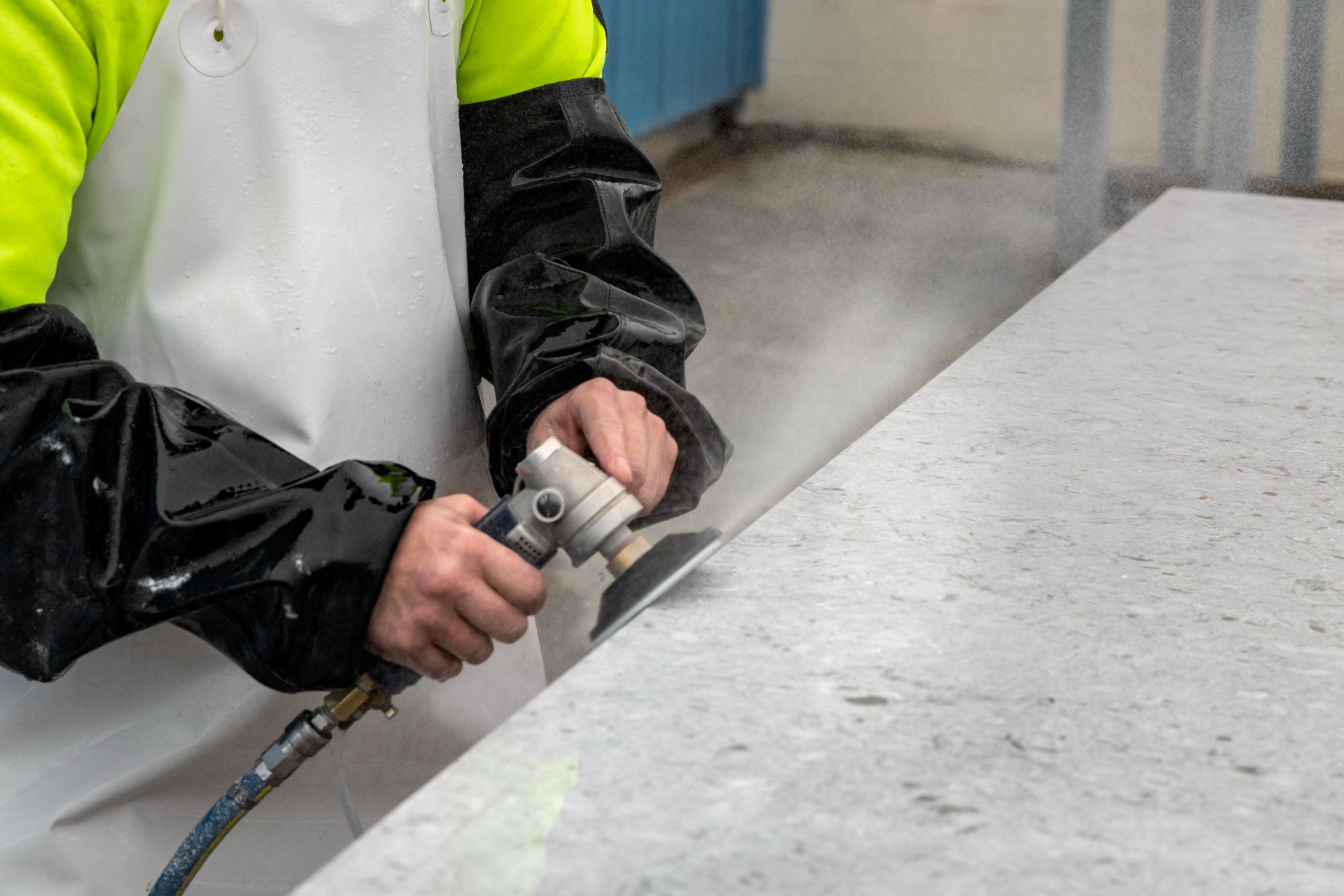
Marble is often thought to be a hard stone, but it’s quite a bit softer than products like porcelain. Mishandling can cause the surface to scratch or even chip. Special tools are required to level and prepare the slabs, and any mishaps can be expensive to repair.
While porcelain is more solid, it doesn’t contain resin like some other engineered stone options. This makes it more rigid, and again, prone to damage with improper handling. At Archant, our team is highly experienced in the appropriate methods and fully equipped with the necessary tools to install it the right way.
What About Warranty Duration – Which is Longer?
With Archant Porcelain, this is an easy answer. All our large format slabs come with a lifetime guarantee. It’s hard to beat this in today’s market regardless of the material you choose. Of course, damage from accidental misuse isn’t covered, but that’s standard protocol for any warranty.
It’s much trickier to pinpoint the warranty duration for marble tiles. In scouring the web and speaking with suppliers around New Zealand, this varies drastically. In some cases, it’s 10 years, while others offer 15 or more. None that we’ve tracked down matched the lifetime guarantee of Archant Porcelain.
The thing to remember is that both products should last a lifetime if cared for properly. Ultimately it depends on how you use your space to determine which warranty is best suited for you.
The Bottom Line Between Marble vs Porcelain
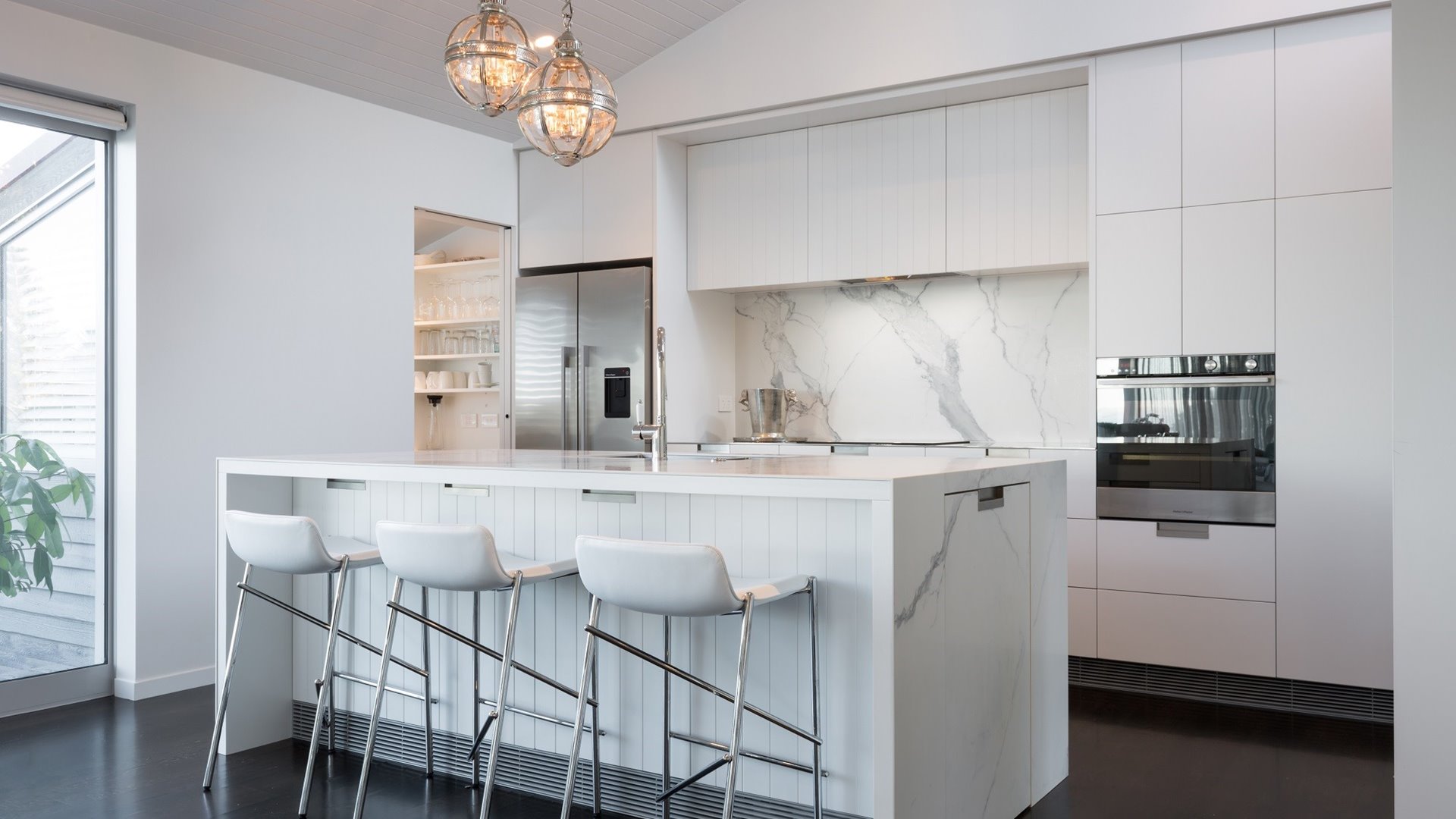
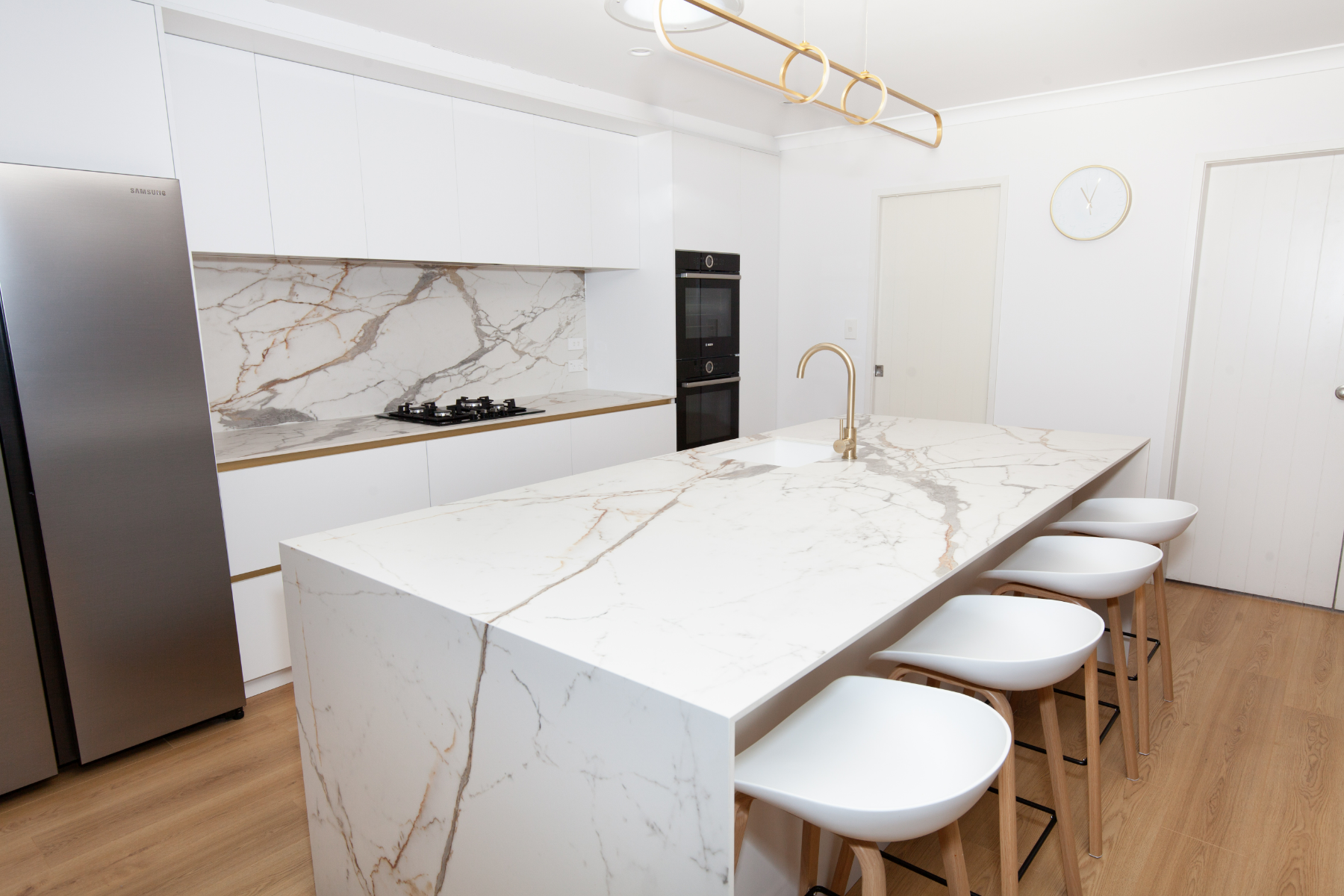
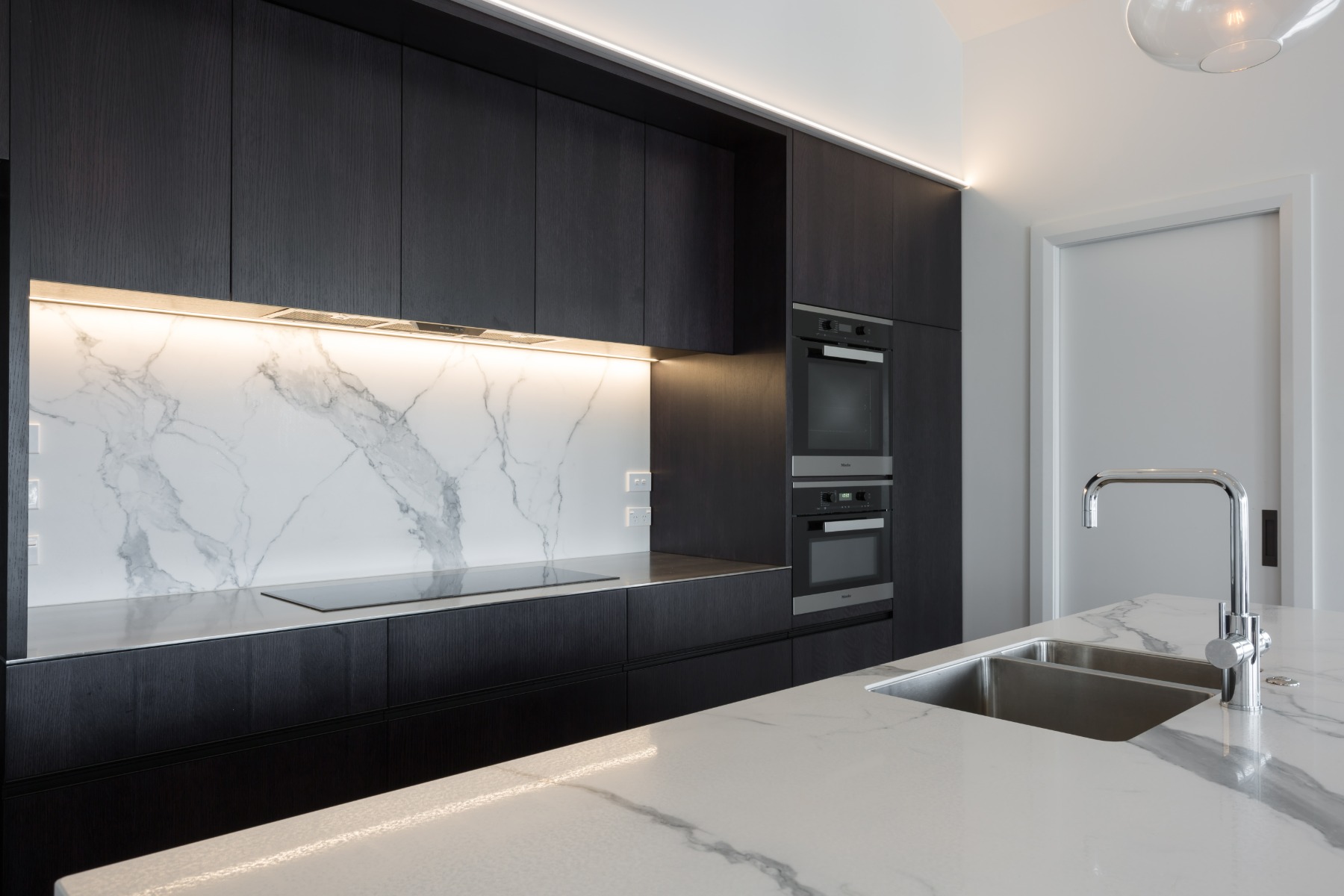
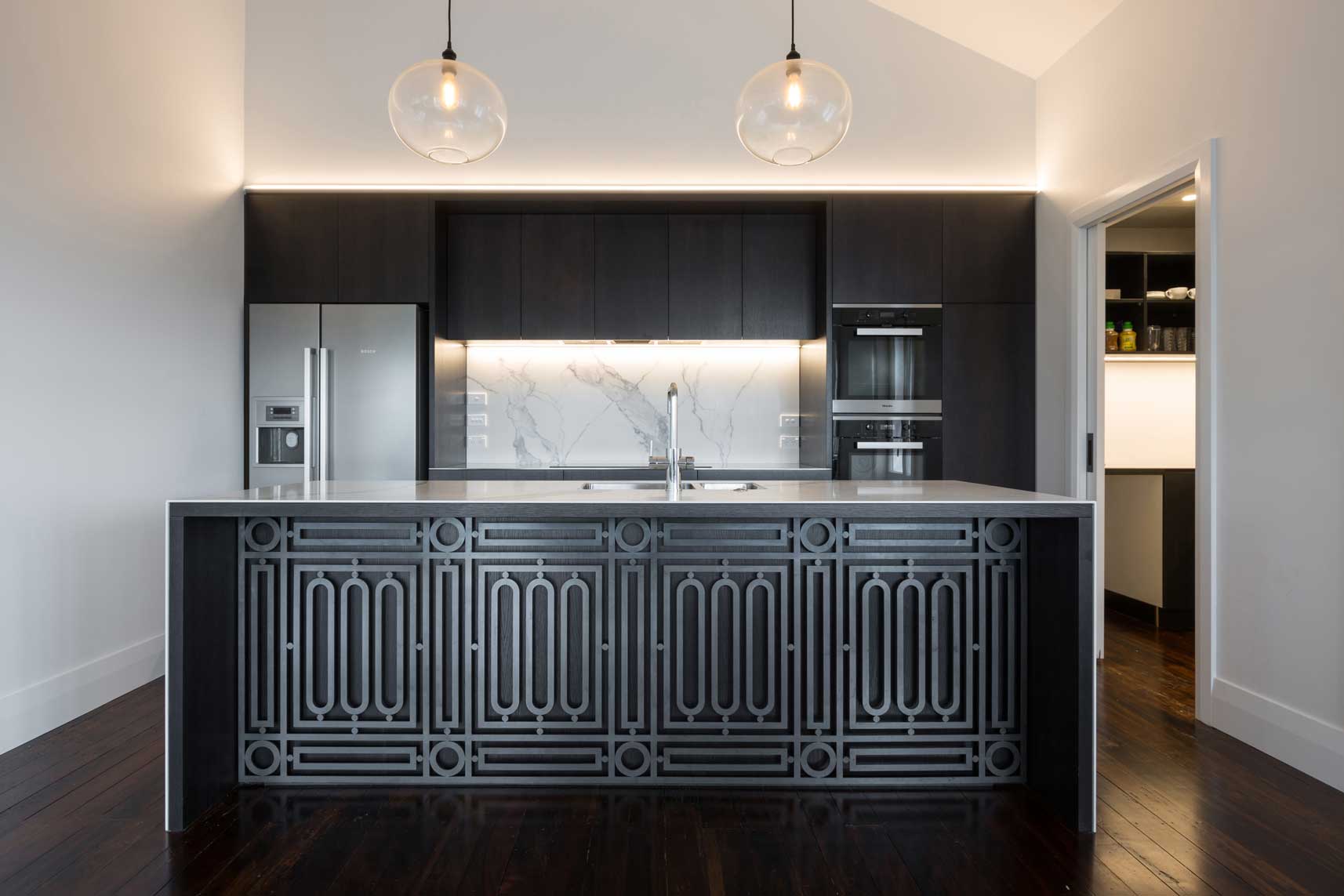
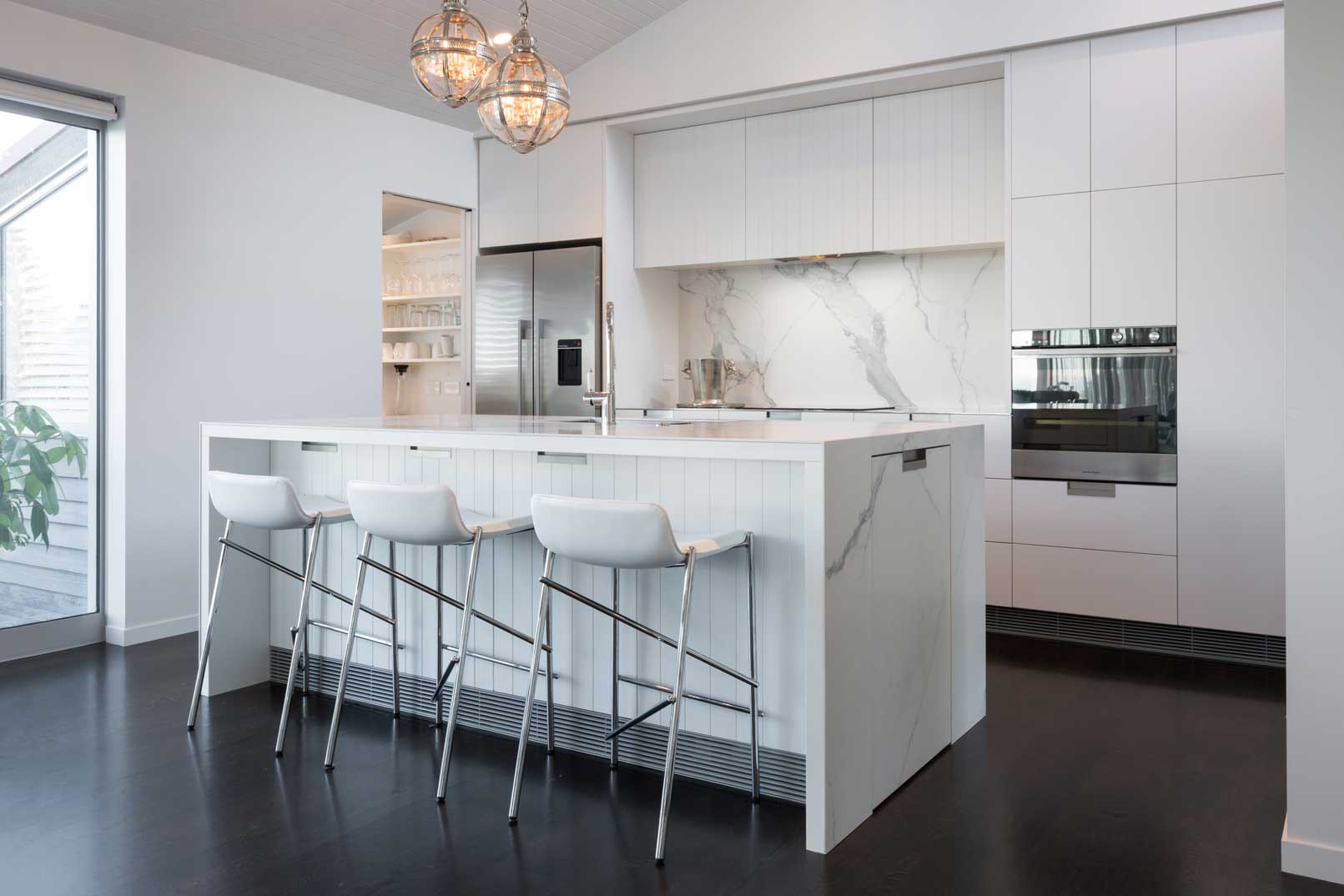
One of the great things about working with clients at Archant is getting to see the before and after transformations of projects in New Zealand. We’ve helped thousands of homeowners and businesses upscale their space with porcelain. The results speak for themselves, as you can see in the pictures here.
Marble once reigned supreme in the design world, but there’s been a definitive shift. It’s still a gorgeous natural stone, but it does come at a premium cost. It also doesn’t offer the same level of durability or warranty as porcelain.
As a result, many of our clients are choosing to leverage porcelain’s unique blend of technology and natural materials to create the look of marble without the inflated cost.
Next Steps for Your New Zealand Benchtop Design
It’s hard to imagine doing any of the above without the help and guidance from a team of professionals. At Archant, we’re committed to educating others about the process and walking with them every step of the way.
We’re here to answer your questions and make your project a reality. Come see our porcelain surface in person and talk with our friendly experts in our inspiring New Zealand showrooms.
Related Links
How to Optimise Porcelain Sheet Size for Kitchen Benchtops and Island Design (A Complete Guide)
What’s the Difference Between Archant Porcelain vs Sintered Stone? A Detailed Comparison
What is Porcelain Bookmatching and How Can it Be Used to Refine Your Design?
6 Common Mistakes to Avoid Making with a Porcelain Benchtop
Top 5 Design Features of Archant Porcelain (Review)
7 Key Differences Between Porcelain and Corian Benchtops (Review and Comparison)
The Ultimate Price Guide to Kitchen Splashbacks (Cost and Comparison)
5 Stunning Ways to Use Large Format Porcelain in Your Design
A Guide to Porcelain Benchtop Costs
How to Design a Durable Overhang for Your Porcelain Benchtop and Kitchen Island
An Honest Review of the Best Kitchen Benchtops on the Market
How Much Should I Budget for My Kitchen Renovation in New Zealand? (Pricing Guide)