
A Review of Porcelain vs Laminate Benchtops (Cost, Style and Durability Comparison)
A Review of Porcelain vs Laminate Benchtops (Cost, Style and Durability Comparison)
If you’re like many of the New Zealand homeowners we talk to at Archant, you’re wondering if a stone benchtop is a good investment, or if a laminate surface will suffice.
This is a great question and one that requires some research. To save you time and streamline the process, we’ve prepared this comparison. By the end, we hope you’ll have more clarity to better finalise your decision.
The benchtop is one of the most heavily used surfaces in the kitchen, if not the entire home. It, therefore, makes a lot of sense to choose the material wisely. Whether you’re making quick meals or a gourmet menu, the kitchen is at the epicentre of family life.
Put simply. It’s where all the action takes place. From meal prep to dining and entertaining, you want it to look good, but also be highly functional and efficient.
The big three factors are cost, durability, and style. So, is it porcelain or laminate that would be best for your kitchen needs? Let’s dive in to compare these two popular options.
Which is a More Durable Benchtop, Porcelain or Laminate?
Each of these materials is a viable choice in a modern kitchen. Yet, before you get too carried away with the available styles and colours, it pays to ask how the benchtop will be used in your home. A key component here is the durability of the surface. As a side part of that, you’ll want to factor in maintenance requirements as well.
Potential Weaknesses of Laminate
Laminate benchtops can have a surprisingly beautiful appearance. Yet, how well do they hold up in a busy kitchen? One concern is that they’re easily scratched. You’ll want to avoid cutting directly on the surface to keep it looking new. They are also prone to burn marks from contact with hot cookware. For these reasons, it’s always advisable to use cutting boards and trivets.
There are other potential issues to consider with laminate surfaces. When struck with any force or hard objects, they can chip. This is especially problematic on or around the edges of the surface which are not as strong. Also, over time they can be damaged by water through a process called delamination. Should this occur, the actual layers of the bench begin to peel apart. This is difficult if not impossible to repair, and often results in the entire bench needing to be replaced.
As for cleaning, laminate counters are reasonably straightforward. Just wipe it down with a mild soap or cleaning solution and it’s all set.
Potential Weaknesses of Porcelain
Porcelain is certainly stronger and more durable than laminate, but it’s not without a few potential areas of concern. The first is rather specific, and it’s for those who use ceramic knives. With stainless steel blades, you can cut and chop directly onto the surface. Yet with the harder material of ceramic knives, they can leave visible scratches.
Porcelain benchtops don’t contain resin or other fillers. This is one of the reasons why it’s resistant to burns from hot cookware. As a result, the bench can be slightly less flexible. This doesn’t mean it’s delicate or prone to damage but be aware that chipping can occur with misuse. For example, attempting to break apart a heavy bag of ice may very well cause damage. So, while porcelain is certainly strong, it’s not indestructible.
When it comes to maintaining a porcelain bench, you can rest easy as the process is very straightforward. You just need a soft cloth or sponge and soapy warm water. It’s resistant to stains and cleans up like new very quickly.
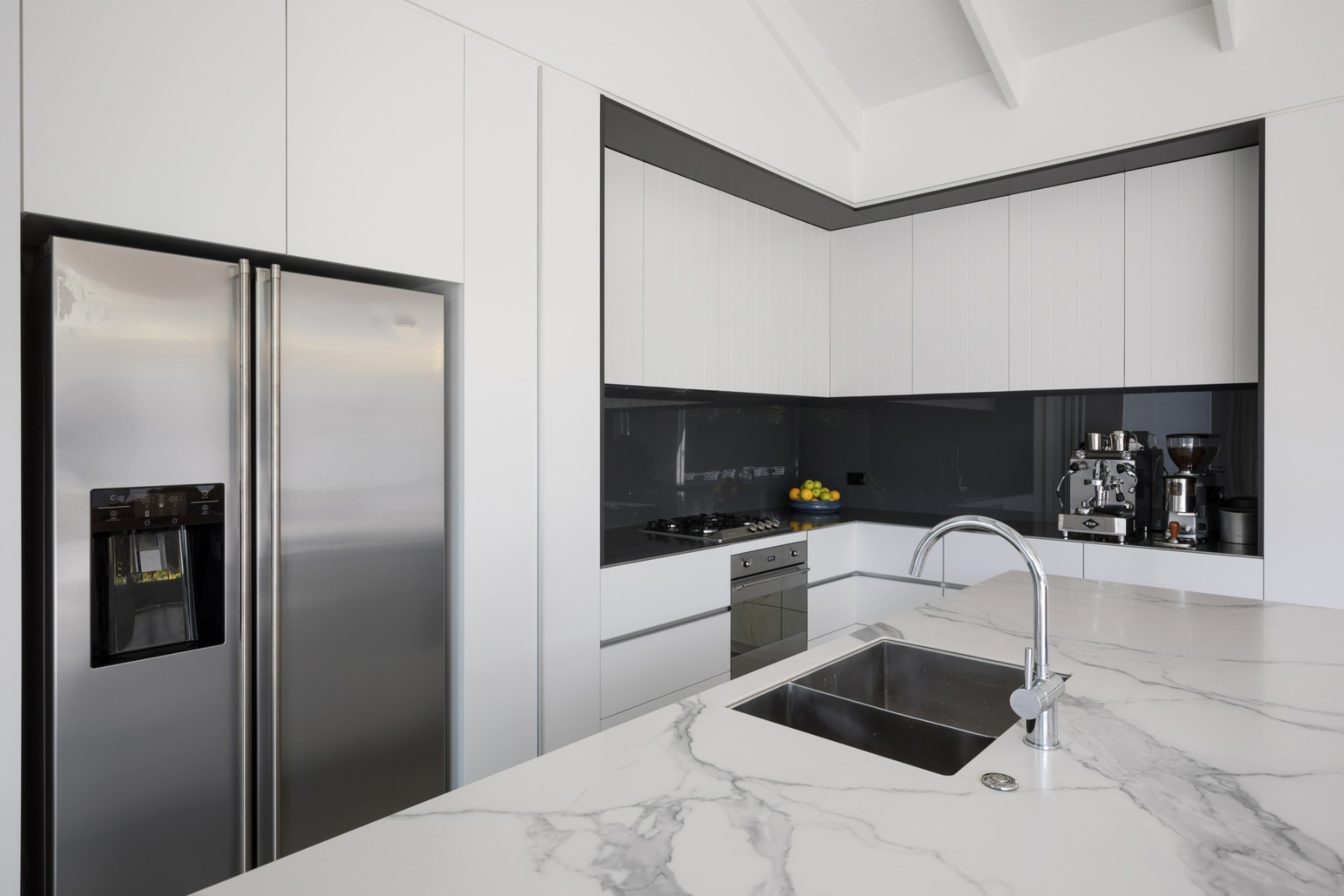
Let’s Talk Costs – Porcelain vs Laminate Benchtops
Pricing is always a big consideration for any home improvement project. With benchtops, it’s not just the material you’re paying for but the installation as well.
Price of Labour Comparisons
Porcelain is a bit trickier to work with and therefore is best installed by experienced tradespeople. They have access to specialised tools and the necessary training to do the job well.
Laminate, on the other hand, is much lighter, and easier to handle. With a DIY installation within reach for most reasonably handy homeowners, this can save a great deal on the overall project cost.
Cost of Materials – Laminate vs Porcelain Surfaces
The low price point of laminate makes them quite popular. These budget-friendly solutions are typically sold by square metre and come in a variety of widths ranging from 600mm to 1200mm. The price range is dependent on the amount of material needed, but also the quality of the laminate surface.
For starters, homeowners can expect to pay about $120 per square metre for an economic surface. Those who wish to upscale their design can do so with more premium finishes.
These range from about $300 - $450 per square meter or more. Those who choose wisely can use laminate to craft a gorgeous design at a fraction of the cost of porcelain and other stone alternatives.
With porcelain benchtops, you are going to pay more for the materials. The reasons behind that though, tell a bigger story. While the upfront cost of porcelain is higher, its lifespan is also far greater.
You can expect a porcelain bench to hold up well for many decades and will therefore not need to be replaced any time soon. At Archant, all porcelain benchtops come with a lifetime warranty.
Depending on the number of slabs needed for your design, and the chosen style, an average price range is about $400 to $550 per square meter for the material.
Keep in mind, that porcelain slabs come in large sizes of 3200 x 1600mm, so if you plan your layout around these measurements, you can save on the overall cost of raw materials.
Style and Design Potential of Porcelain vs Laminate Benchtops
Both materials feature an almost endless array of styles to choose from. Whether you are looking for a simple elegant design or a bold pattern with darker colours, you can find it in porcelain and laminate.
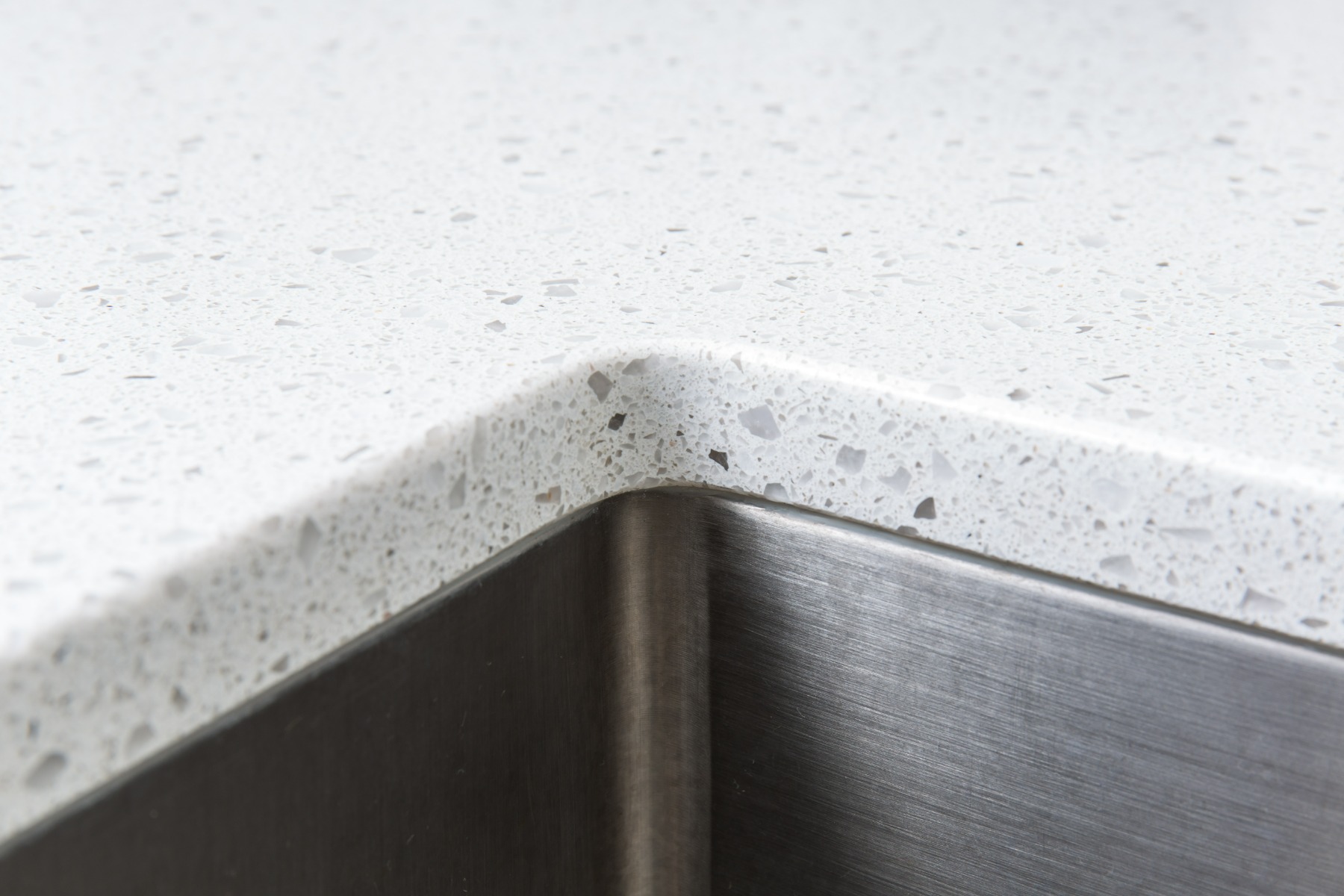
In recent years, many manufacturers of laminate have improved the appearance of their surfaces. Some are surprisingly similar to the luxurious look of real stone. Some offer textured surfaces and matt finishes that hide fingerprints and other imperfections. And while these designs are quite beautiful, a notable difference from porcelain is in the lack of reflectivity.
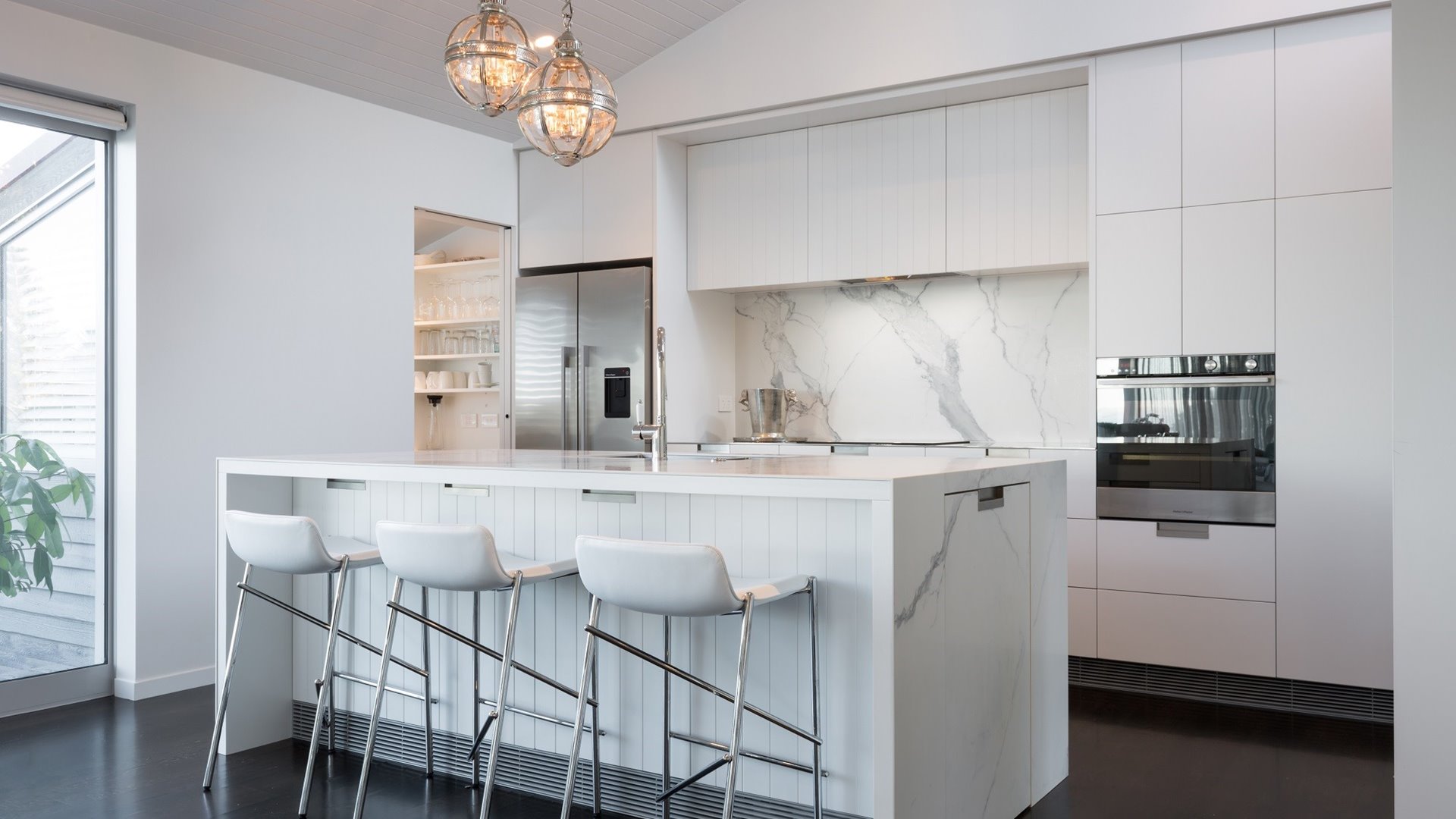
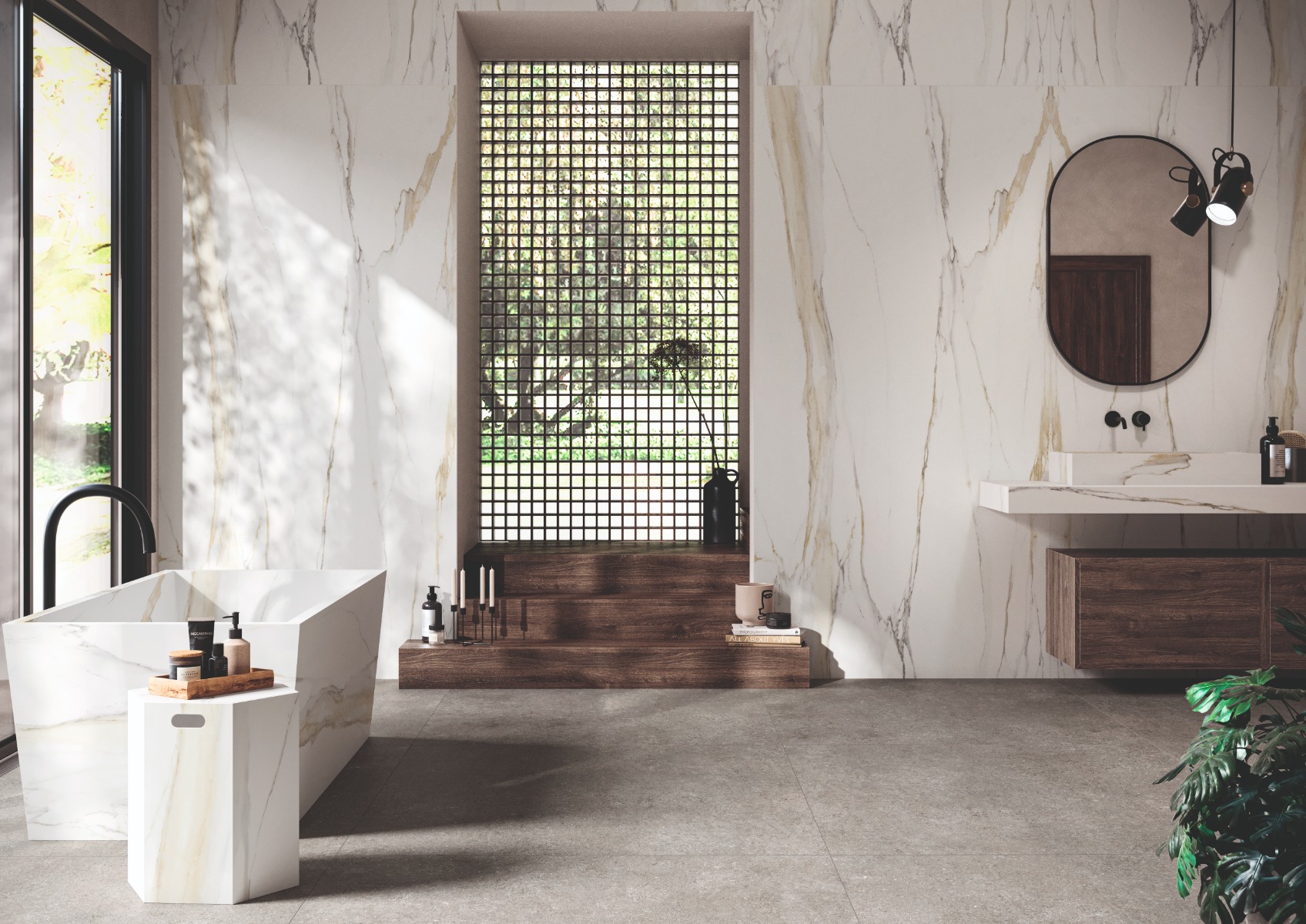
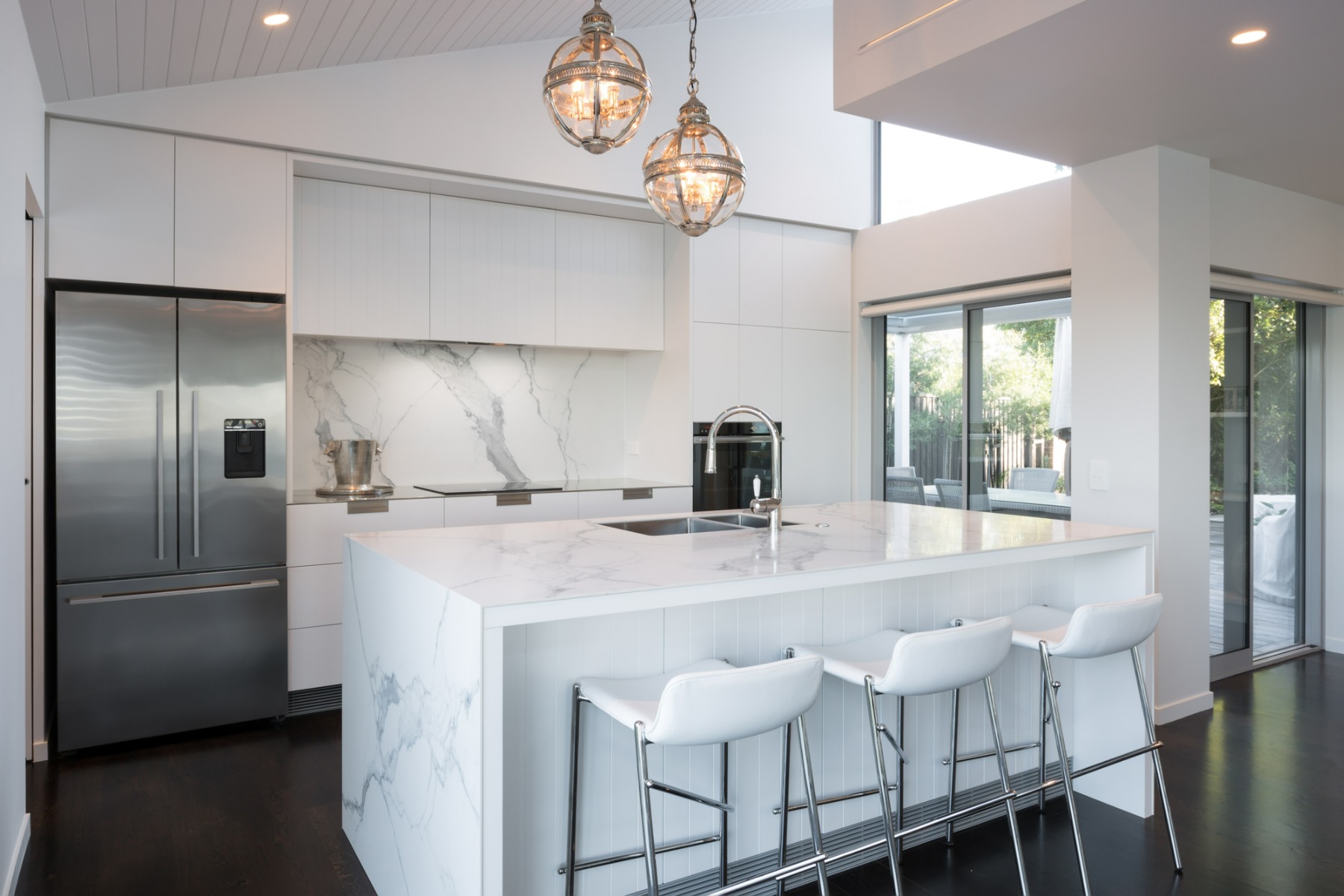
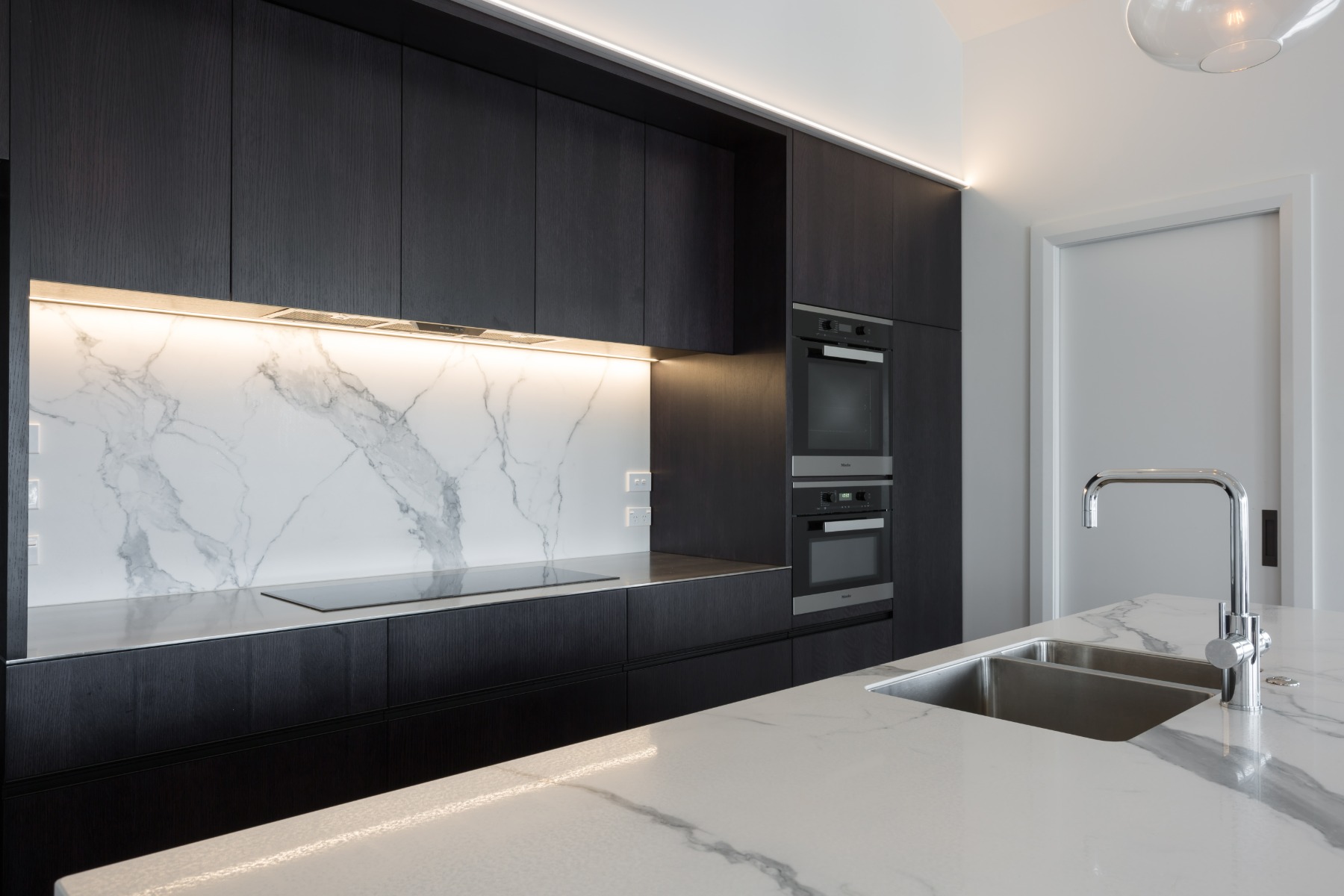
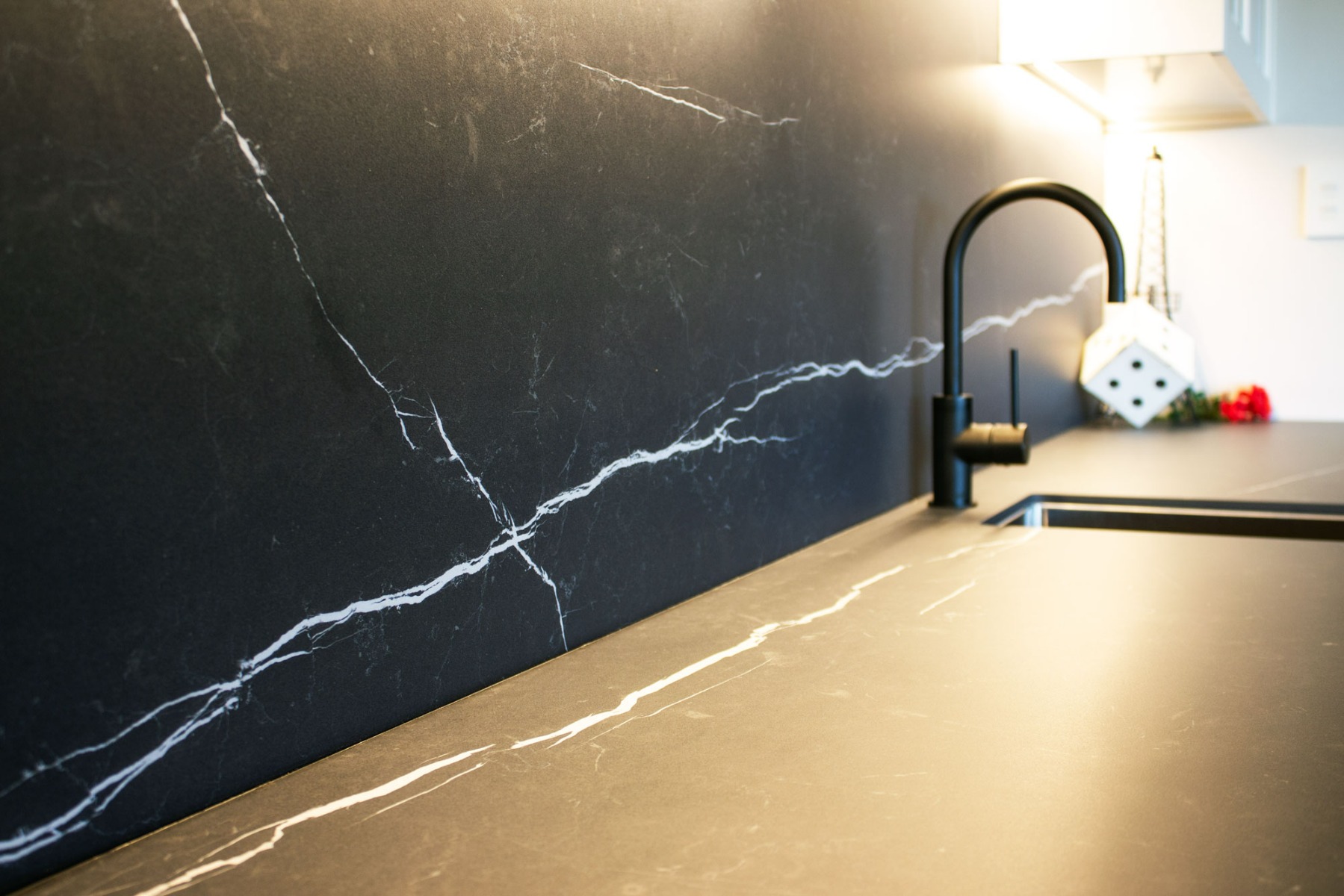
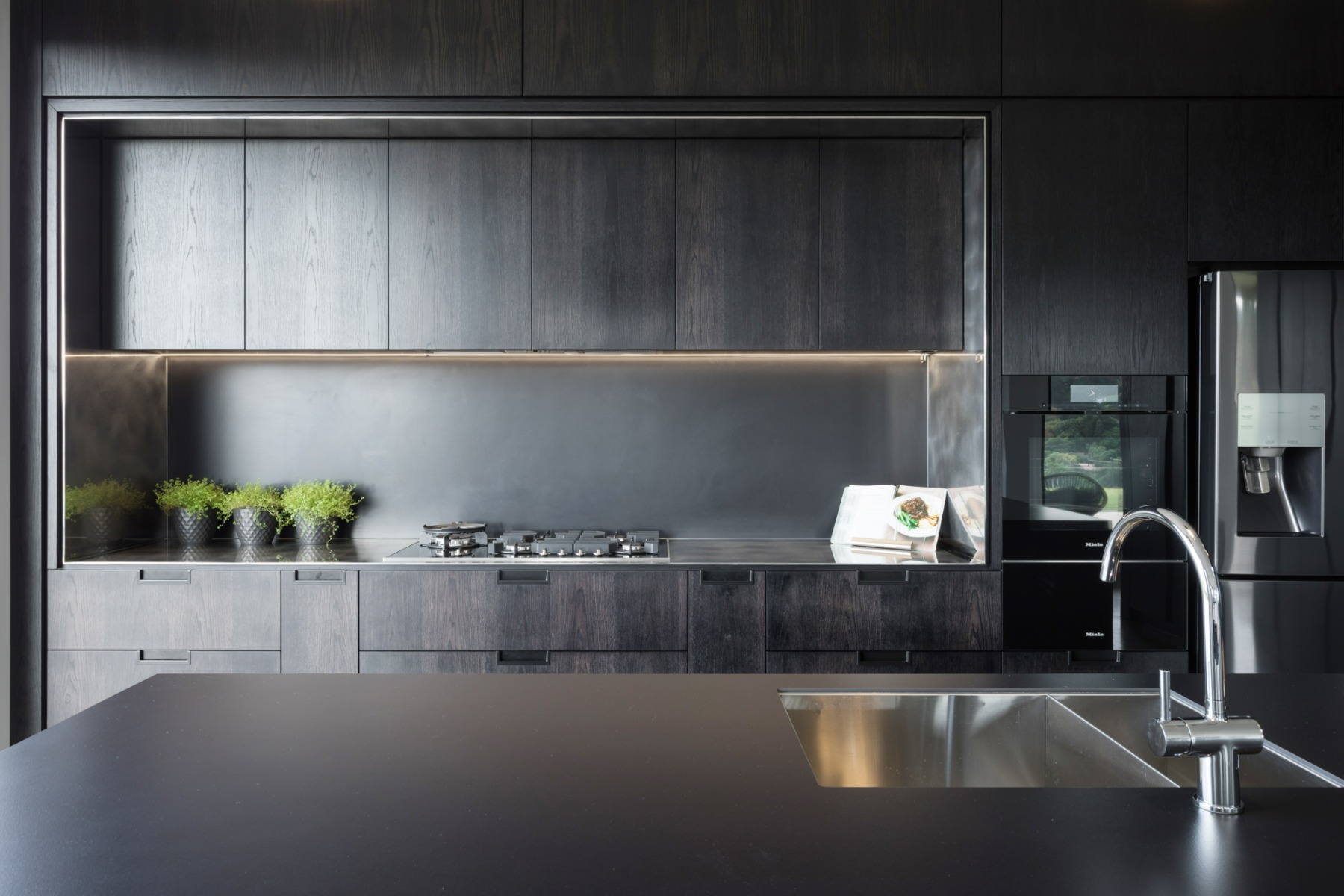
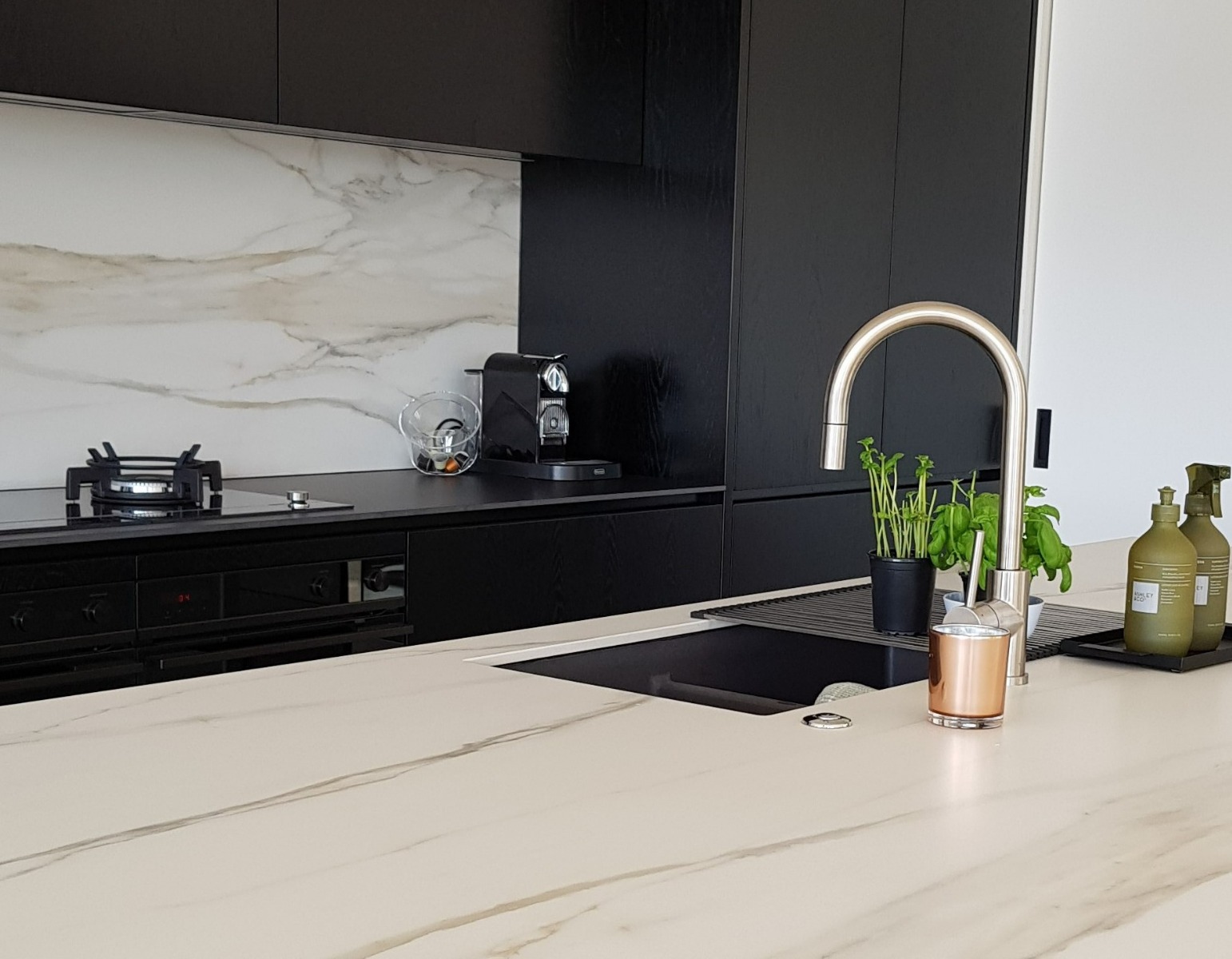
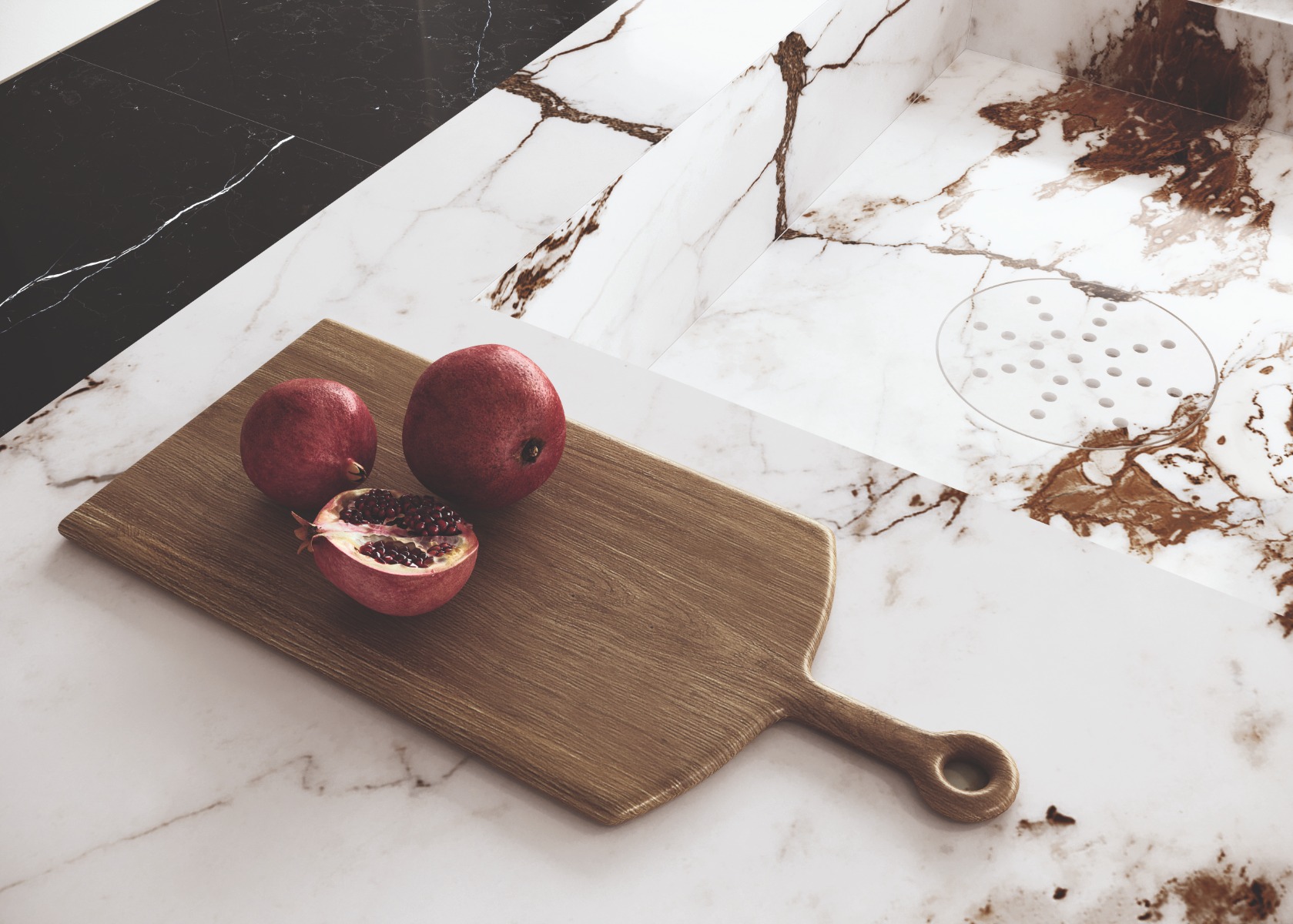
Porcelain is also available with textured surfaces in addition to matt and gloss finishes. The stone has a showstopping way of catching and reflecting the light. This pristine shimmering quality sets it apart visually from laminate. Its unique fabrication process makes it possible to mimic stone, marble, concrete, timber, and rustic metal. This wide range of high-quality options makes porcelain a rare blend of form and function. Most interior designers will note that if the budget allows for it, porcelain offers homeowners a larger scope of design potential.
In Conclusion
There are advantages to each of these two benchtop materials. In terms of durability and the life cycle of the product, porcelain is the clear winner. If short-term savings is the goal, the advantage goes to laminate. As for available style options, they both feature a deep catalogue of colours and finishes.
You’ll want to weigh all these considerations according to your project parameters to determine which is the right fit for you. Would you like to check out porcelain for yourself to see if it would work in your kitchen? We offer free stone samples here. You can also talk with a design specialist by calling 0800 (Archant) or visiting any one of our inspiring showrooms.
Related Links
7 Key Differences Between Porcelain and Corian Benchtops (Review and Comparison)
Which is the Best Benchtop: Concrete, Porcelain, or Quartz (Comparison)
When Will My Benchtop Be Installed? A Breakdown of the Process
A Guide to Porcelain Benchtop Costs
The Ultimate Cost Guide to Caesarstone Benchtops (Pricing)
Porcelain vs Dekton: Which is the Best Benchtop?
Porcelain vs Quartz: A Pricing Comparison
Top 10 Pros and Cons of Quartz Metropolis Benchtops (Review)