
Florimstone Porcelain vs Neolith Benchtops (a Comparison Guide)
Florimstone™ vs Neolith Benchtops (a comparison guide)
Shopping for a kitchen benchtop, countertop or worktop seems to be more confusing than ever before. There are all kinds of terms out there like sintered stone, engineered stone, porcelian, natural stone, etc.
A quick web search only seems to further complicate things with talk of tiles, sheets, large-format and slabs. It’s no wonder we hear from people with more questions than answers.
At Archant, as suppliers of decorative surfaces and products for interior and exterior spaces, we want you to be empowered with the knowledge to choose the benchtop best suited to your family’s needs. In this article, we’ll take a close look at two of the leading options on the market today.
Florimstone or Neolith? Which is right for your kitchen? Read on as we’ve already done the research for you.
What is Neolith?
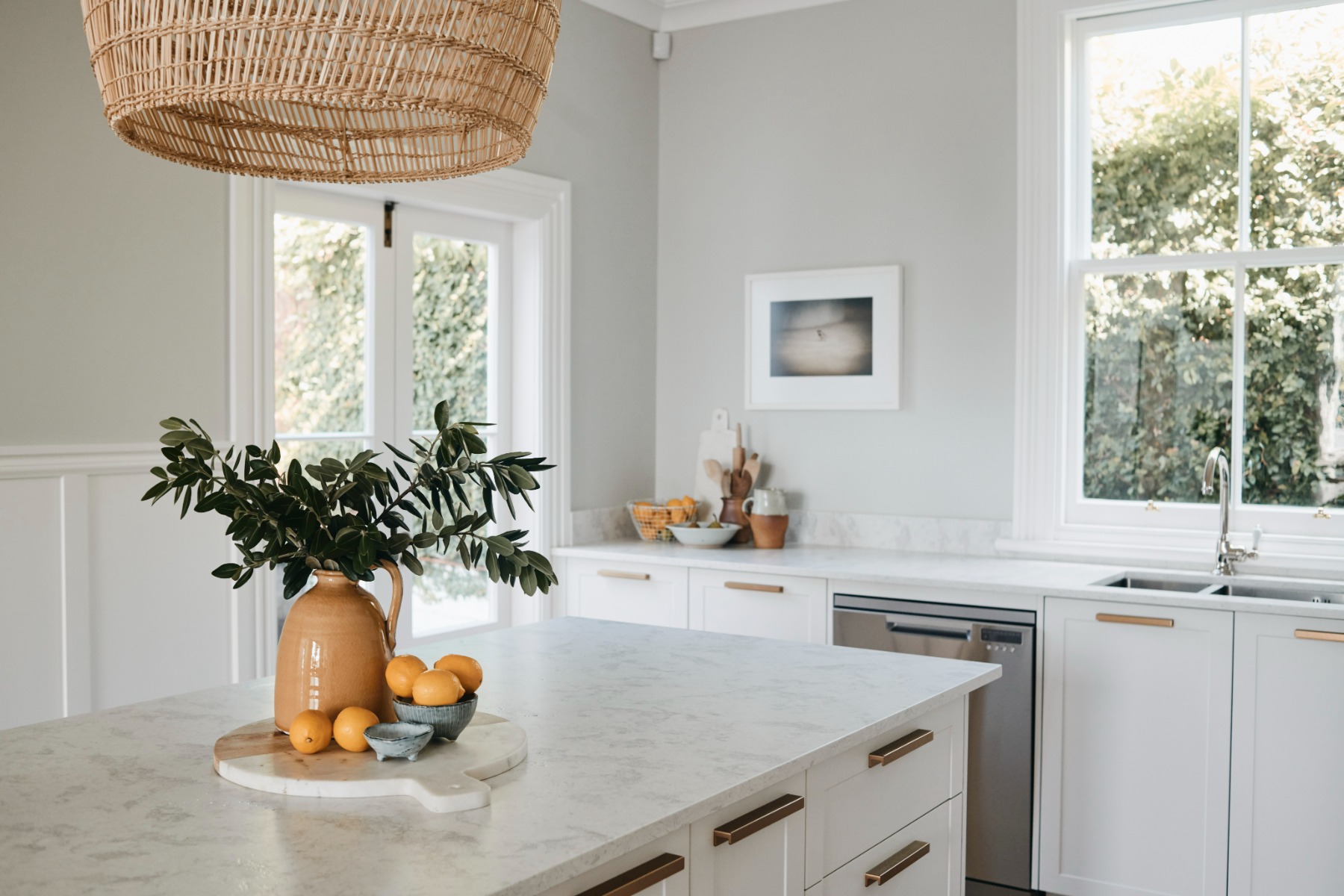
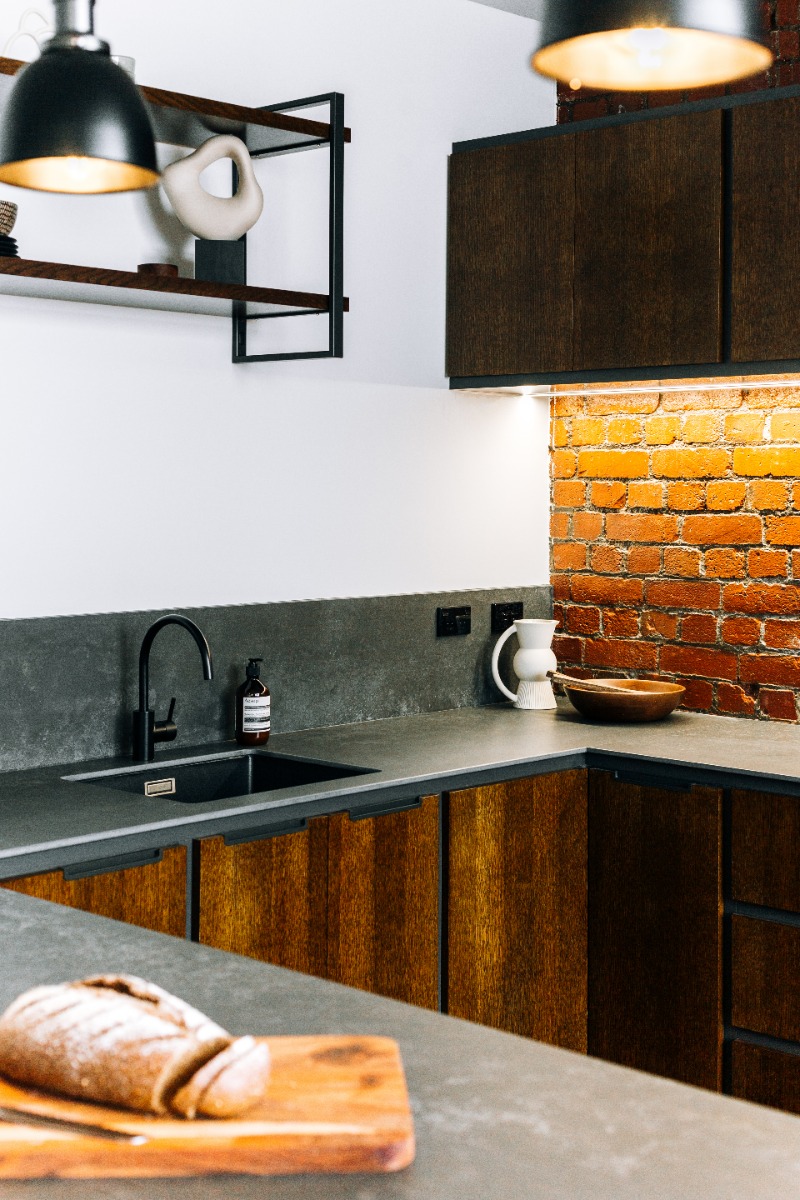
Neolith is a brand name for a sintered stone surface. It’s been on the market since 2009 and has grown in popularity thanks to its lightweight nature, and abundant design potential. There are other brands using sintered stone, such as Dekton, Laminam, and Lapitec. So, while there are several different names out there, the product is ultimately created using the same process known as Sinterized Particle Technology (SPT).
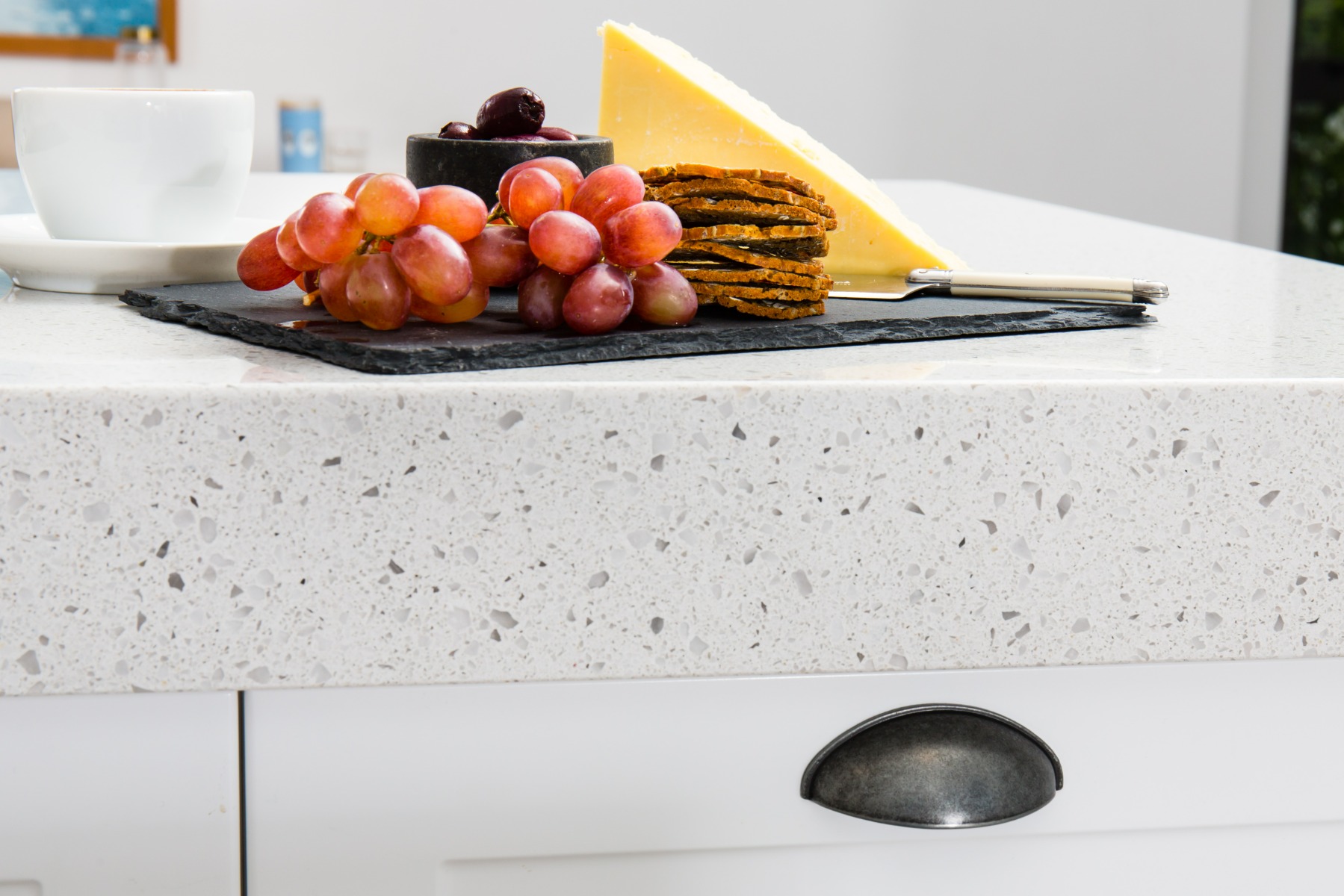
The exact mix of ingredients used can vary, but generally, these surfaces are made with crushed natural stone, glass, porcelain, and other recyclable materials. It’s heated at incredibly high temperatures to bond all the elements together. The result is a benchtop that’s strong, resistant to UV rays, and rich in style variability.
What Makes Neolith Popular?
With the absence of any resins, Neolith surfaces are known for being heat resistant. Cookware can be placed right on the surface without fear of damage.
It can also be used indoors or outdoors as it’s impervious to the sun’s UV rays. Maintaining these benchtops is straightforward and does not require any special steps to clean.
It’s also scratch-resistant, which means you can chop your veggies directly on the counter. Also, since Neolith is lightweight, there’s rarely a need to reinforce existing cabinetry or flooring.
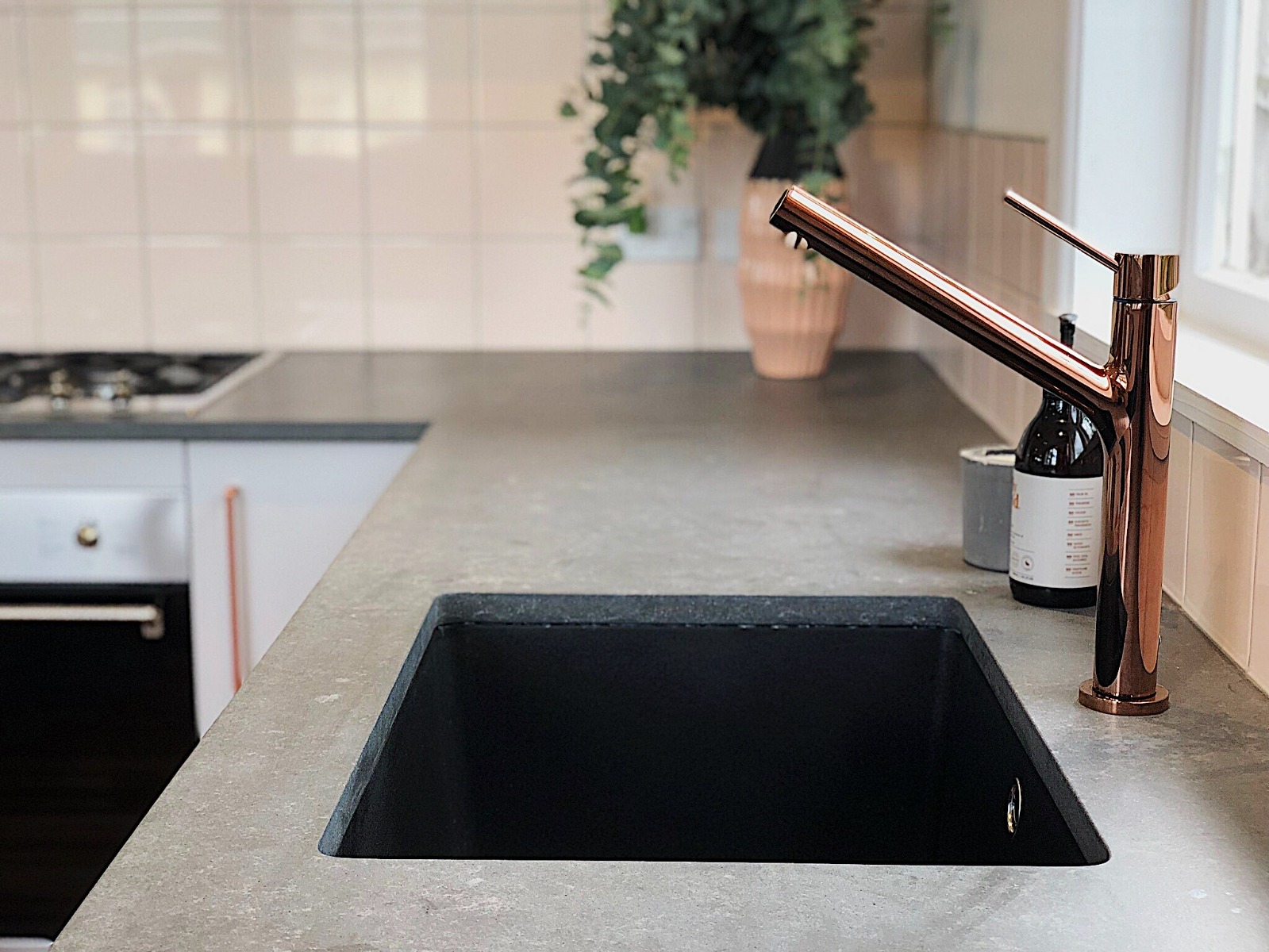
There’s a big variety of styles available as it can be made to look like just about any other material.
Lifetime Cost of Ownership
You can expect Neolith to be in the same price range as mid to high-end granite surfaces. This puts it towards the higher end of the benchtop price scale. It typically needs to be installed by professionals and labour costs will vary depending on the layout complexity and size or thickness. If taken care of properly, a Neolith benchtop or worktop should last for several decades.
For the 12mm and 20mm thicknesses, Neolith offers a 25-year warranty for residential countertops. If a benchtop was installed prior to March 2019, they offered a ten-year limited warrant. And while it is a durable solution, it’s not indestructible. Neolith can chip or crack with accidental misuse. These can usually be repaired, but the process is rather involved and typically comes at the homeowner’s expense.
How Does Florimstone Compare?
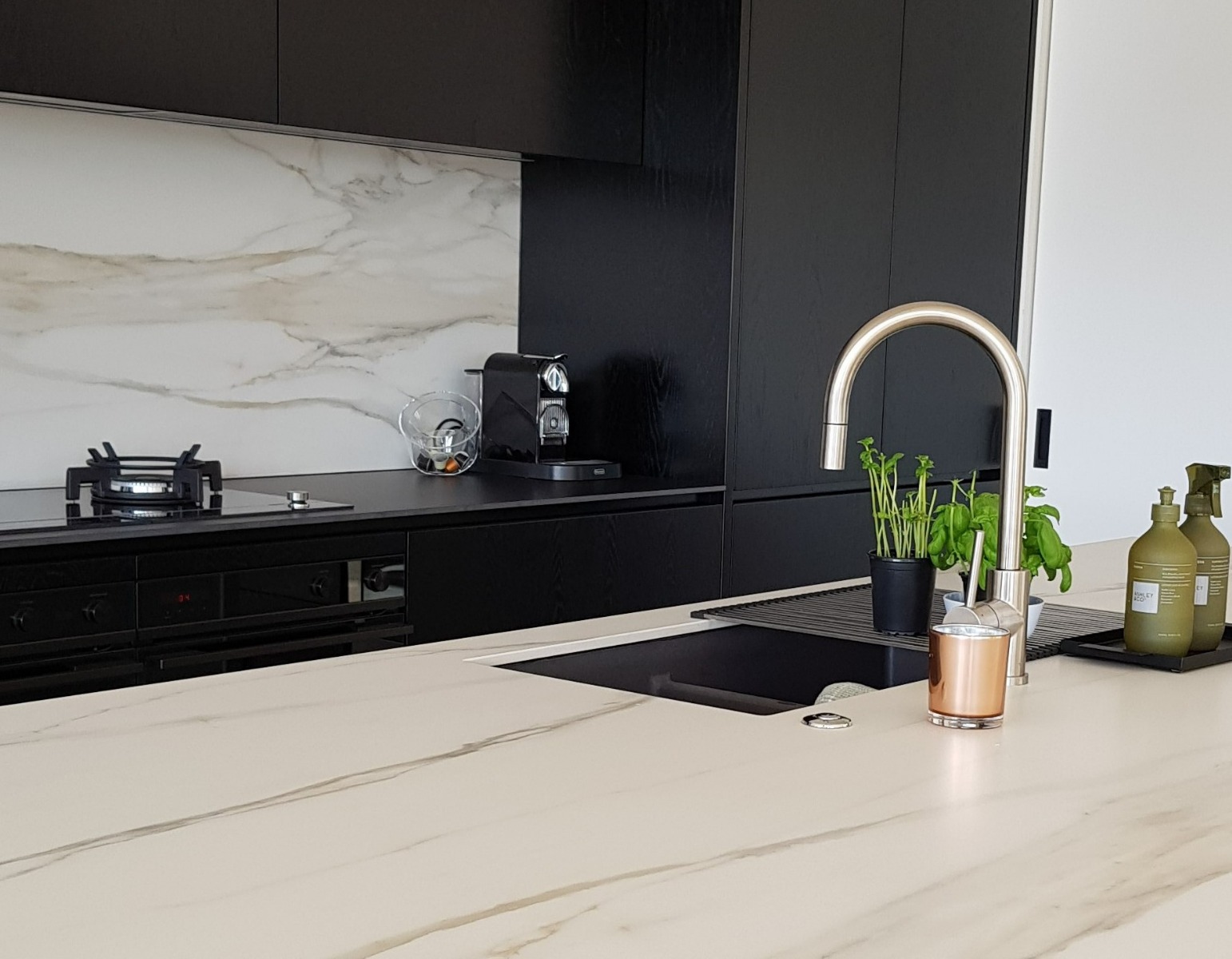
Beautifully crafted in Italy, Florimstone is a porcelain that shares many of the same quality characteristics as Neolith. Its heat resistant, impervious to UV rays, scratch, and stain-resistant, strong, and durable. There’s no need to use a chopping block or a trivet, and the non-porous nature provides an ultra-hygienic and safe place to prepare meals.
Clean-up is also a cinch and is as easy as using warm soapy water and a soft sponge. Cared for properly, a porcelain bench will serve you well for the foreseeable future.
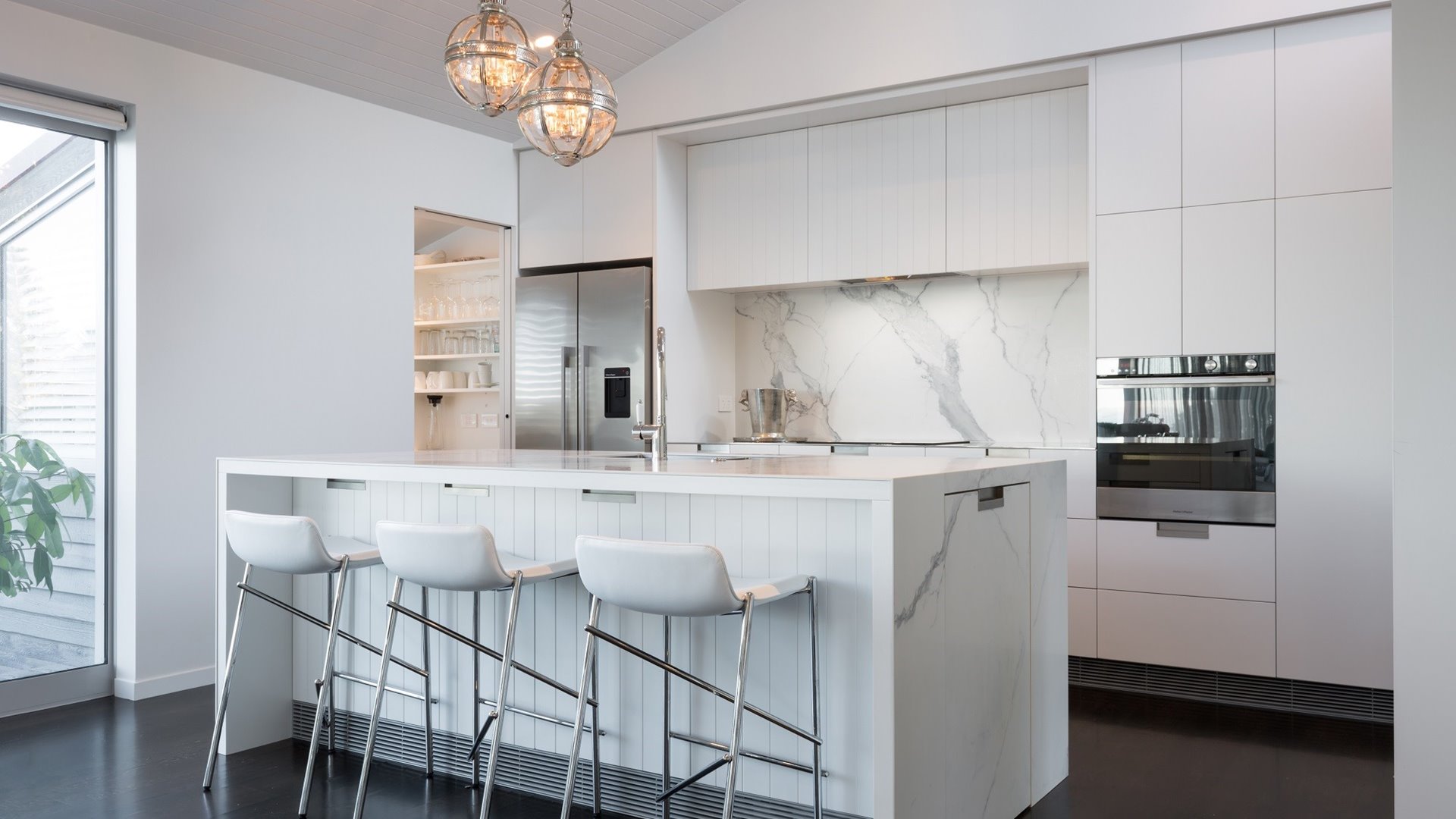
In terms of style, porcelain can be made to look like a huge variety of materials such as metal, timber, marble and more. You can choose from a polished finish or more of a textured surface.
The large format slabs come in thicknesses of 6mm and 12mm. The 12mm option is ideal for benchtops, whereas the 6mm slabs are more suitable for splashbacks, walls, and flooring. For design flexibility, all of these can be reinforced with a substrate product called WEDI, and then fabricated up to whatever thickness benchtop or countertop you choose - even up to 100mm.
Porcelain benchtops like Florimstone and Duro are becoming increasingly popular around the world and here in New Zealand. Interior designers love its durable nature and its high-end appearance with the latest high-resolution decors. Many potential home buyers place extra value on this desirable material, and it therefore can increase the overall sale price of a property.
What are the 3 Main Differences of Florimstone vs Neolith?
These benchtops share many outstanding qualities, making it challenging to tell them apart. Visually speaking, they are remarkably comparable. Even in terms of pricing, the difference is negligible. There are, however, three notable distinctions between the two that should be considered.
- Florimstone benchtops do not contain glass as it’s a ceramic product made from powdered clay, silica, and coloured pigments. The result is a very strong slab albeit slightly heavier than Neolith.
- Florimstone porcelain slabs are imported exclusively from Italy and come in two different thicknesses, 6mm and 12mm. A 3mm option is due for release in late 2024. Thicker slabs require more material and shipping costs, so are priced accordingly.
- Archant Porcelain benchtops, both Florimstone and the more cost-effective Duro both come with a lifetime warranty compared to the 25vyears Neolith offers for residential benchtops.
Ready to Move Your Project Forward?
If you've already used our benchtop calculator and our online visualiser, you may be ready to go to the next step.
Based on all the similarities between these two benchtop solutions, we know it’s challenging to get a feel for them online. For this reason, we offer free porcelain samples that you can use in your design preparation. Another great option is to books some time at one of our inspiring showrooms to see the large porcelain slabs up close. We have a team of friendly design experts ready to help guide your project needs.
In Stock and Ready to Install
We stock a large variety of porcelain styles right here in New Zealand. This means there’s no need to wait for an overseas shipment and slow down your project. Our network of approved fabricators and installers undergo the most comprehensive training to stay at the forefront of porcelain benchtop design. From your initial vision to the completed project, our goal is to not only meet your expectations but exceed them. With Archant, you can expect friendly and professional service every step of the way.
Related Links
Porcelain vs Dekton: Which is the Best Benchtop?
Porcelain vs Quartz: A Pricing Comparison
7 Key Differences Between Porcelain and Corian Benchtops (Review and Comparison)
Which is the Best Benchtop: Concrete, Porcelain, or Quartz (Comparison)
When Will My Benchtop Be Installed? A Breakdown of the Process
A Guide to Porcelain Benchtop Costs
A Review of Porcelain vs Laminate Benchtops (Cost, Style and Durability Comparison)