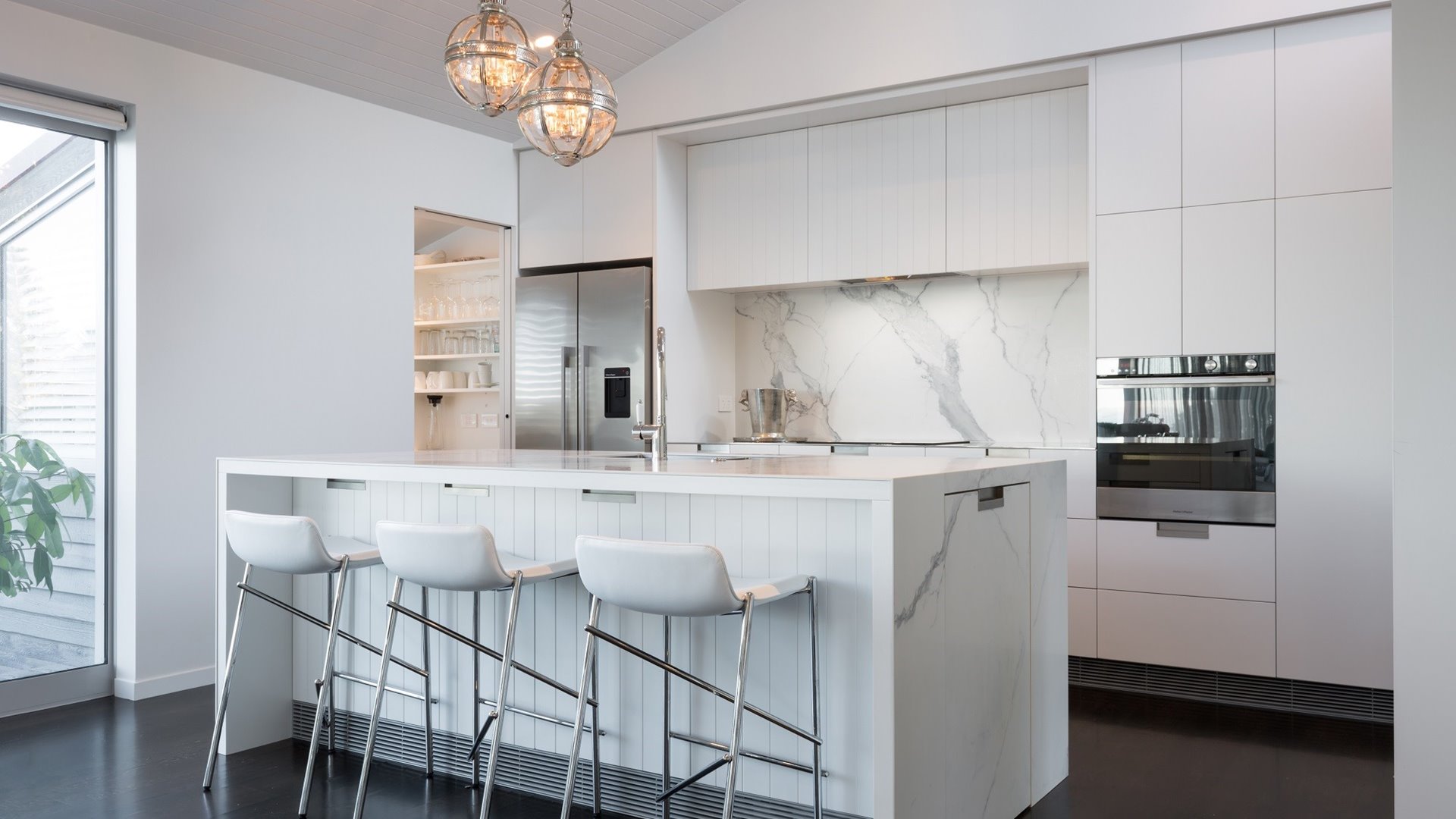

Engineered Stone vs Porcelain vs Natural Stone Benchtops – A Comparison Guide
Engineered Stone vs Natural Stone Benchtops – A Comparison Guide
You’ve been scouring the web for benchtop pricing in New Zealand, but the wide range of quotes is making it hard to narrow down your choices. One particularly confusing topic is the difference between engineered and natural stone. They look remarkably similar, but the cost is anything but equal.
At Archant, we pride ourselves on providing honest and transparent information on design inquiries. Whether you shop with us or not, we want to educate and empower people to choose the right stone for their projects. This is an important decision as it directly affects the bottom-line cost, style, durability, and product longevity.
In this article, you’ll learn the key differences between engineered stone, porcelain, and natural stone. We’ll talk about what drives the pricing, and what you can expect in terms of the life of your surface. Of similar importance is the subject of durability and maintenance. By the end, we trust you’ll have gained a solid knowledge of all these considerations and more.
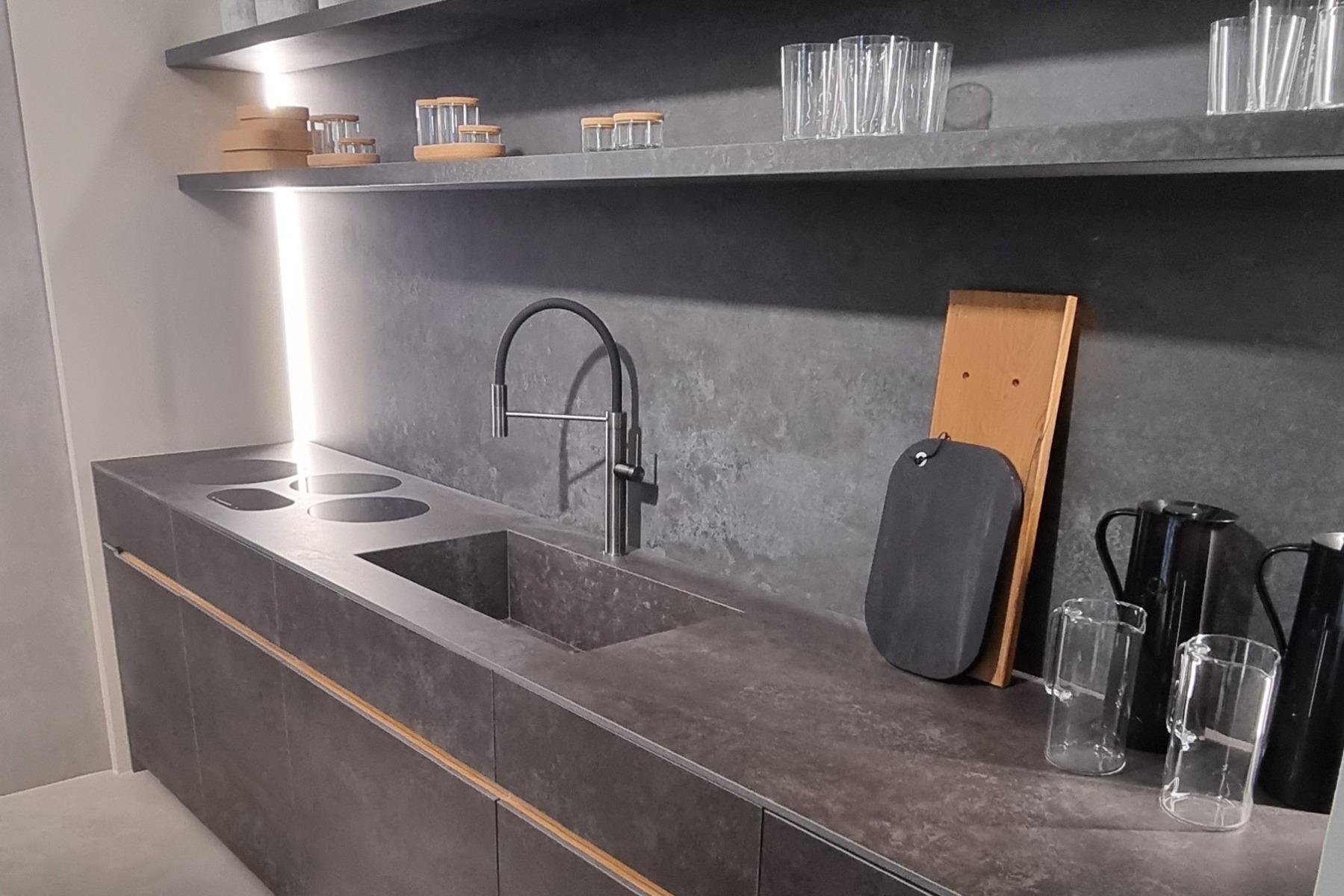
Engineered Stone vs Porcelain vs Natural Stone Benchtops – How Are They Made?
These two options look remarkably similar. In fact, only a small percentage of people will be able to tell the difference when looking at your benchtop. Despite the visual similarities, the makeup of each is quite different.
With natural stone, the material is literally taken from the earth. A few of the common types include marble, granite, travertine, and onyx. This amazing feat is done with a variety of tools including powerful drills, explosives, cranes, and more. After being extracted from the quarry, it then follows a detailed procedure. This typically involves the stone being transported, cut, and then polished. It’s at this stage the slab becomes usable as a benchtop surface.
As you can imagine, all of this is quite an involved process and one that makes natural stone much more expensive than engineered stone.
To create a benchtop from engineered stone, there is no need for explosives or mining equipment. It’s a composite mixture of crushed stone and other materials. The exact blend of ingredients depends on the product. For example, Archant quartz surfaces consist of 93% natural quartz and 7% resins.
Alternatively, Archant Porcelain is a mixture of natural materials and does not include resins. It’s pressed and subjected to a firing process at over 1200°C.
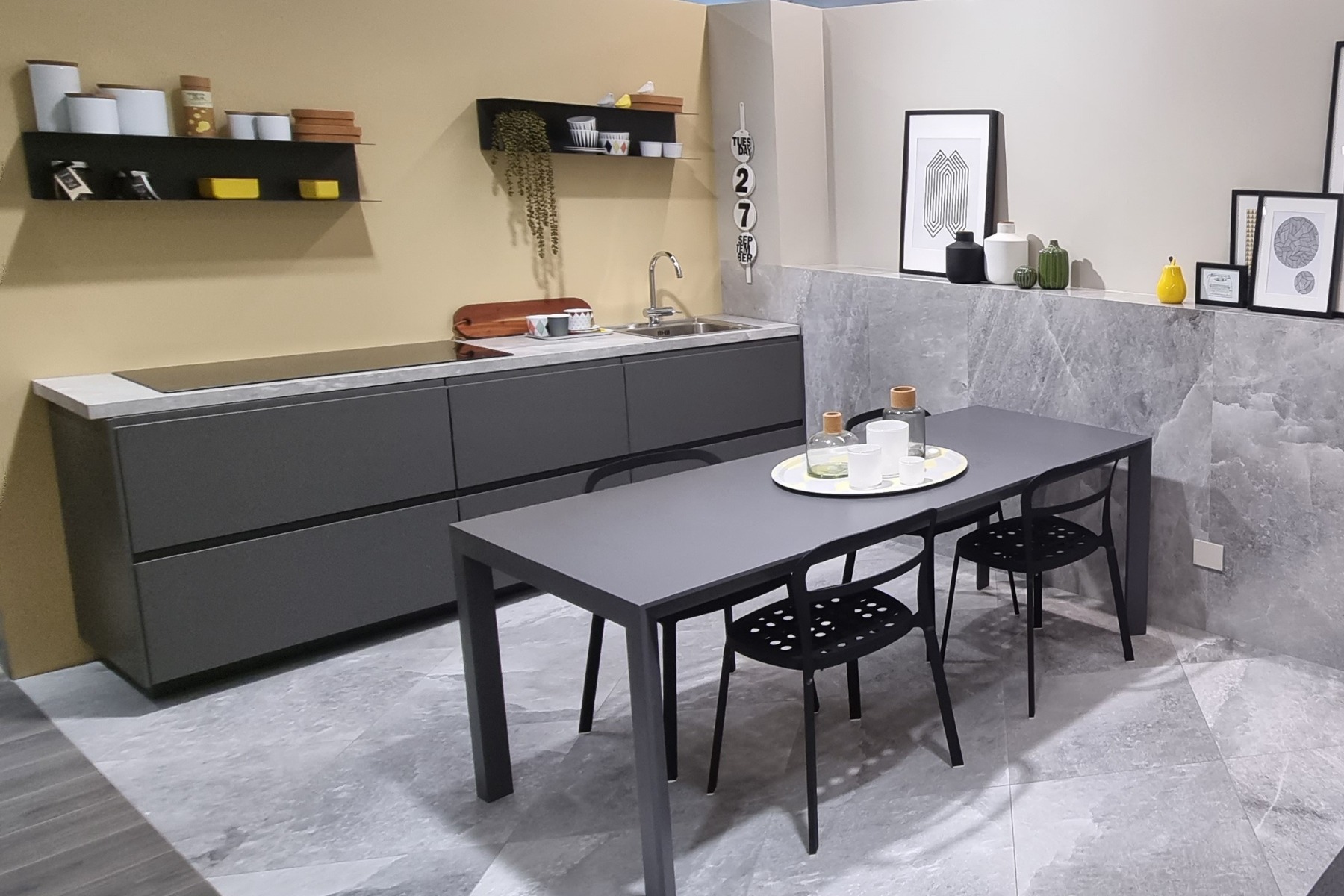
What Are the Differences in Style?
Since natural stone is pulled from a quarry, each slab is totally unique. Several aspects will be different from one slab to the next. This includes the colour and pattern detail including veining and speckles.
Of course, anytime you’re dealing with natural materials there can be flaws and irregularities to be aware of. This is important to note as you’ll want to make sure you’re purchasing from a reputable distributor with excellent quality control.
Engineered Stone:
If we were to describe a key characteristic of engineered stone in one word, it would be consistent. Since they are created in a controlled environment, you can expect the same colour and patterns even when purchasing multiple slabs. This is an important consideration when you’re trying to cover a large area with matching tiles.
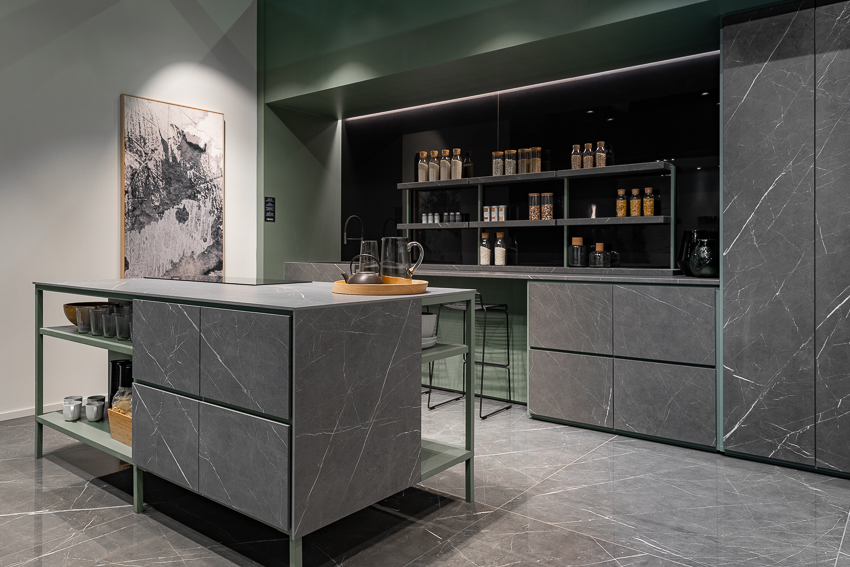
What’s More Durable, Natural Stone, Engineered Stone, or Porcelain?
If you were to forget all the other differences between these two types of stone, there is one distinction that is critical to remember. Natural stone is porous, and engineered stone like porcelain and quartz is non-porous. Why is this so important to note?
With a porous surface like granite, the stone is prone to damage from a variety of issues. They can scratch rather easily, and acidic beverages can get into the pores and leave stains and marks that can’t be removed. There are ways to prevent this, like treating your benchtop with a special sealant a few times each year. Even so, you’ll need to be more cautious with natural stone to keep it looking new for the long term.
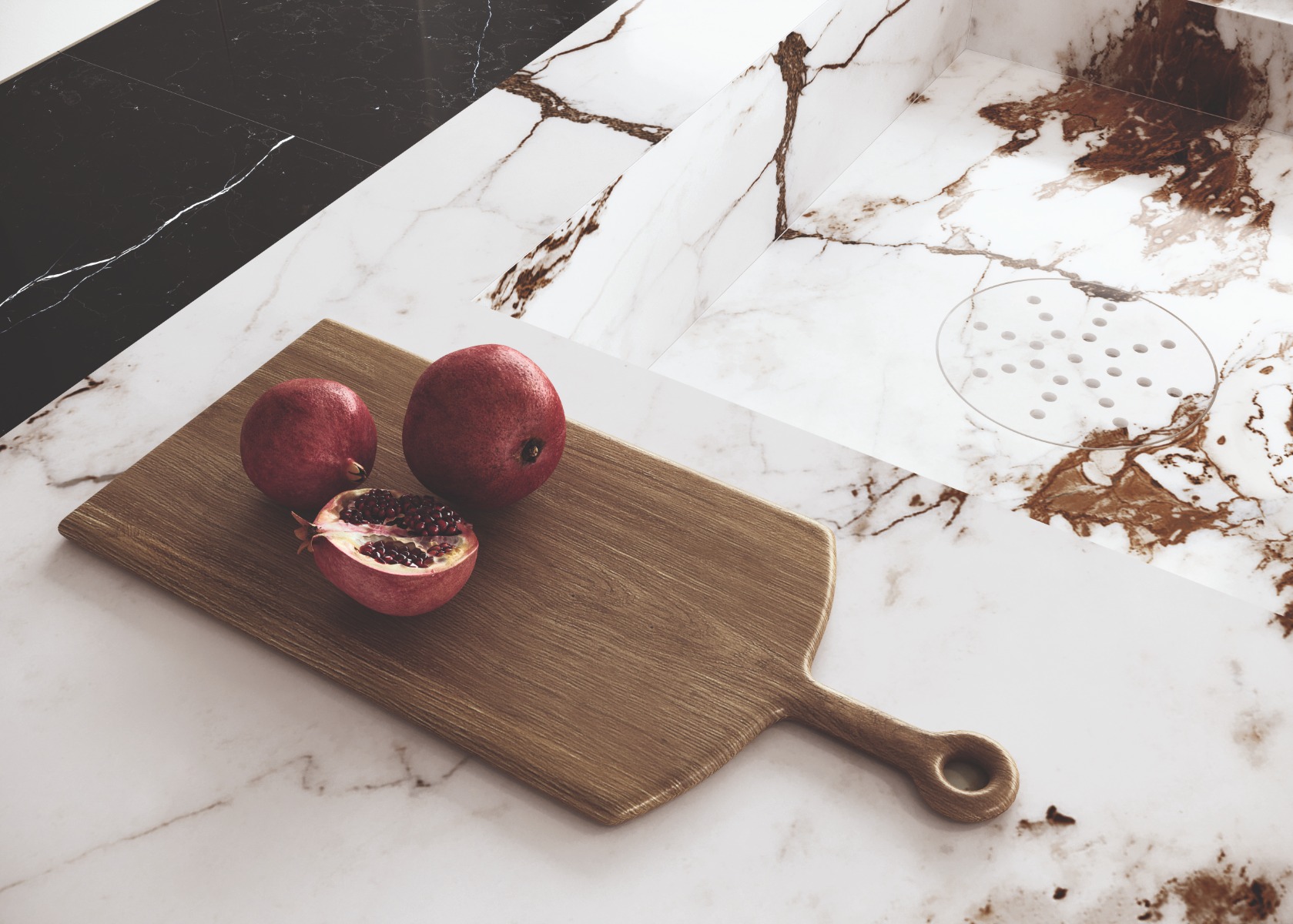
Non-porous surfaces resolve these issues by leaving nowhere for germs and acidic beverages to get trapped and damage the stone. They offer a wide variety of resistant qualities. With engineered stone, you have a bench that’s difficult to scratch, resistant to stains, and easy to maintain and clean up. Unlike natural stone, there’s no need to apply a sealant each year. Porcelain takes this durability one step further as it offers heat resistance as well.
What’s the Bottom Line?
In looking at the bigger picture, the main differences between each type of stone are clear. Natural stone is beautiful but considerably more expensive than engineered stone. This is due to the highly involved and technical way natural stone is extracted from quarries. For jobs that require multiple slabs, matching tiles can also be problematic as natural stone will differ in colour and patterns. It is also a porous surface, making it susceptible to stains and scratches.
Engineered stone and porcelain are not pulled from nature but still uses natural materials. Each slab offers consistent design qualities making it very easy to match the colour palette of your project. It’s far less expensive than natural stone since it’s created in a controlled environment leveraging advances in technology. Finally, they offer extreme durability thanks to their non-porous nature. When you factor in all these qualities, it’s easy to see the benefits of engineered stone and porcelain over natural stone.
Get an Estimated Price for a Porcelain Benchtop Now
Would you like to get an instant price range estimate for your kitchen benchtop? We have a new pricing calculator to plan and create estimates for your porcelain bench. Use it to explore the different styles and price points. Just note, the final price can vary based on the details and finishing touches of your design.
Related Links
The Next Big Thing in Porcelain Benchtop Design: Wireless Charging Capability
Up and Coming Trends in Porcelain Design You Don’t Want to Miss
How to Buy a Benchtop that Fits Your Family Needs for 2023 and Beyond
3 Common Problems with Concrete Benchtops (And How Porcelain Can Be a Better Alternative)
What You Don’t Know About the Durability of Porcelain
How to Use Porcelain to Create Long Lasting and Stylish Commercial Spaces
7 Answers to the Most Frequently Asked Questions About Porcelain
The Next Big Thing in Flooring – Large Format Porcelain
What’s the Difference Between Archant Porcelain vs Sintered Stone? A Detailed Comparison
How to Optimise Porcelain Sheet Size for Kitchen Benchtops and Island Design (A Complete Guide)
6 Common Mistakes to Avoid Making with a Porcelain Benchtop
Porcelain vs Quartz Benchtops: Which is the Best Surface For Your Kitchen? (Comparison)